Contents
The AAI RQ-7 Shadow is a tactical surveillance drone built by AAI Corporation and flown by the US Army at brigade level1. Defense News calls it the Textron-made Shadow drone2, and Military Times describes it as a small surveillance drone3. Each Shadow system includes four air vehicles, two ground control stations and two datalinks, and by October 2017 the Army had bought 114 Shadow systems4, according to Textron.
Design and development
The Shadow came out of the US Army’s search for a battlefield drone after the cancellation of the Alliant RQ-6 Outrider. AAI followed up its RQ-2 Pioneer with the Shadow 200, a similar, more refined UAS. In late 19991 the Army selected the Shadow 200 to fill its tactical UAS requirement and redesignated it the RQ-7.
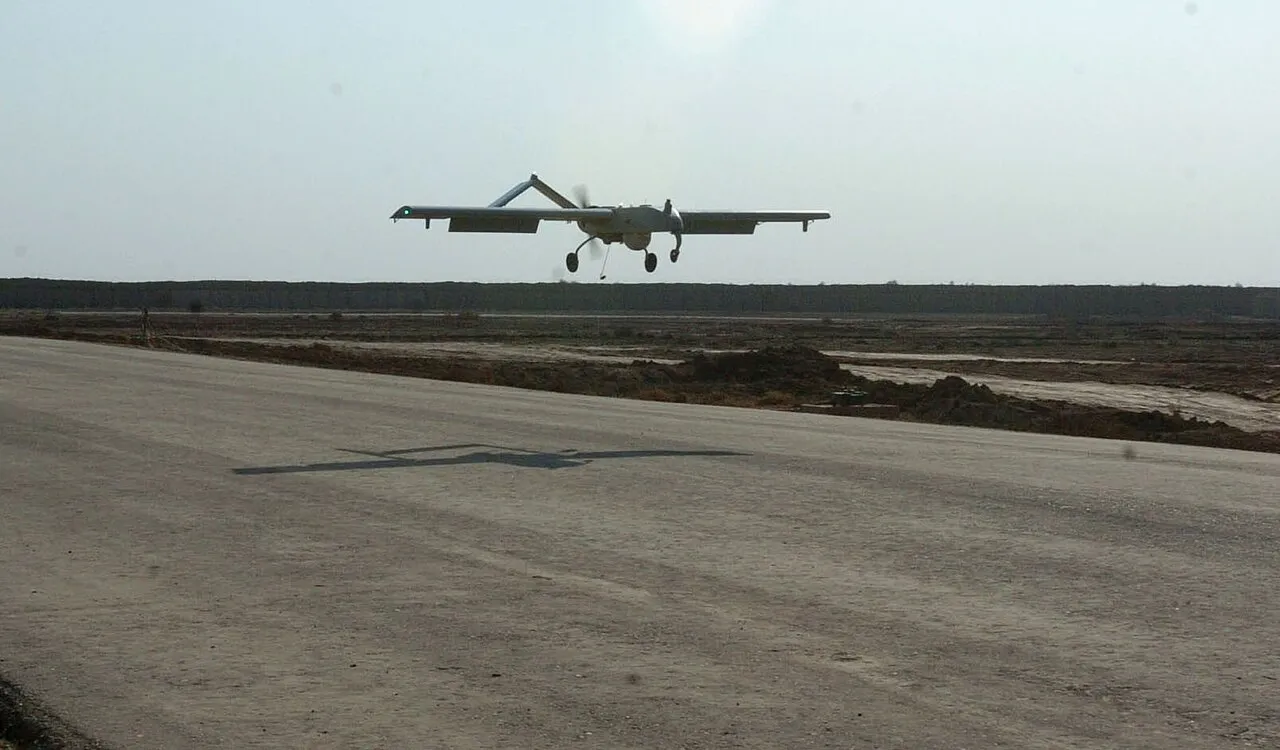
The aircraft is a high-wing pusher design with twin tail booms and an inverted V-tail, on fixed tricycle landing gear. It is launched from a trailer-mounted pneumatic catapult, and landings are guided by a Tactical Automatic Landing System1 from the Sierra Nevada Corporation, after which a tailhook catches an arresting wire.
Textron’s Block III upgrade lets the Shadow operate in two inches of rain per hour, a fourfold increase from its previous capability. Noise has been a recurring complaint. The Shadow has been criticized for its noise signature5, and a Textron official told Defense News in 2017 that one point of feedback over the years was that it was too loud. The same official said adversaries would stay indoors when they could hear it, and that new mufflers4 would let the Army operate it more clandestinely.
Specifications
The RQ-7B is powered by a 38 bhp AR741-1101 Wankel engine made by UAV Engines Ltd in the United Kingdom. The Block 3 upgrade replaces it with a more powerful engine of 49 horsepower4. The specification data give a maximum speed of 200 km/h and a cruise speed of 130 km/h1.
Sensors and weapons
The Shadow’s main payload has been the Israeli POP300 Plug-in Optical Payload1, with a forward-looking infrared camera, a daytime TV camera and a laser pointer. Its video goes to the ground control station in real time over a C-band line-of-sight data link. The RQ-7B’s wing can also take a communications relay package, which lets the aircraft act as a radio relay station.
Block III carries the L3 Wescam MX-105 electro-optical/infrared payload, which Textron described as one of its most notable upgrades, and a Joint Tactical Radio System for communications relay. Textron’s 2017 upgrade contract4 also covered a more powerful mission computer.
Several weapons were tried on the Shadow, including Raytheon’s Small Tactical Munition, Lockheed Martin’s Shadow Hawk glide weapon and Textron’s Fury precision weapon. By May 20151 the Marine Corps had run out of funding for arming the RQ-7, and the Army’s stance is that the Shadow’s primary capability is persistent surveillance.
Operators and combat use
The Shadow flew operational missions in support of Operation Iraqi Freedom, and Shadow drones have flown more than 600,000 combat hours1 in support of the wars in Iraq and Afghanistan.
The US Marine Corps began moving from the RQ-2 Pioneer to the Shadow in 20071. In the Corps it flew 39,000 flight hours over 11 deployments in nearly ten years, supporting Marines in Helmand, Afghanistan. Its last Marine flight took place in July 20183 at Marine Corps Air Station Kaneohe Bay, Hawaii, as the Corps changed over to the RQ-21 Blackjack.
The Army began considering requirements for a Shadow replacement in 2018. Defense News reported that the Shadow is difficult to deploy and has a loud engine2, which allows for easy detection. In February 2024 the Army revealed it had decided to replace its entire Shadow fleet. An estimated 500 RQ-7Bs1 were with the US Army as of January 2025.
Abroad, the Italian Army ordered four Shadow 200 systems in July 2010, and Sweden received 8 aircraft early in 20111, modified by Saab as the UAV03 Örnen. Australia also flew the Shadow 200. In September 20246 Defense News reported that the Australian Army was fielding Insitu RQ-21A Integrators to replace its Shadow 200 aircraft.
Variants
- RQ-7A: the first version, delivered in low-rate production in 20021, with a 148 kg maximum take-off weight.
- RQ-7B: production moved to this generally improved model in the summer of 20041, with longer, fuel-carrying wings.
- RQ-7BV2: first fielded in March 20151, with encrypted data links, a fuel-injected engine and a 6.1 m wing for nine hours’ endurance.
- Shadow Block III: an upgrade with a new engine and better video payload, with rollout to the fleet expected in 20205.
Similar drones
- Insitu RQ-21 Blackjack: the Marine Corps’ Shadow replacement, which can be launched from ships at sea3.
- AeroVironment Jump 20: chosen in 20222 as the Army’s first future tactical UAS to replace the runway-dependent Shadow.
- Textron Aerosonde HQ: a runway-independent5 hybrid quadrotor design offered as a possible Shadow replacement.
- General Atomics MQ-1 Predator: upgraded to carry and fire two AGM-114 Hellfire missiles7, while the Army sees the Shadow’s primary capability as persistent surveillance1.