Contents
The Lockheed SR-71 Blackbird is a long-range, high-altitude strategic reconnaissance aircraft built by Lockheed’s Skunk Works division. The United States Air Force flew it to photograph and gather signals intelligence over denied territory during the Cold War1, relying on sheer speed and altitude rather than stealth or evasive manoeuvring to survive over hostile airspace.
Design and development
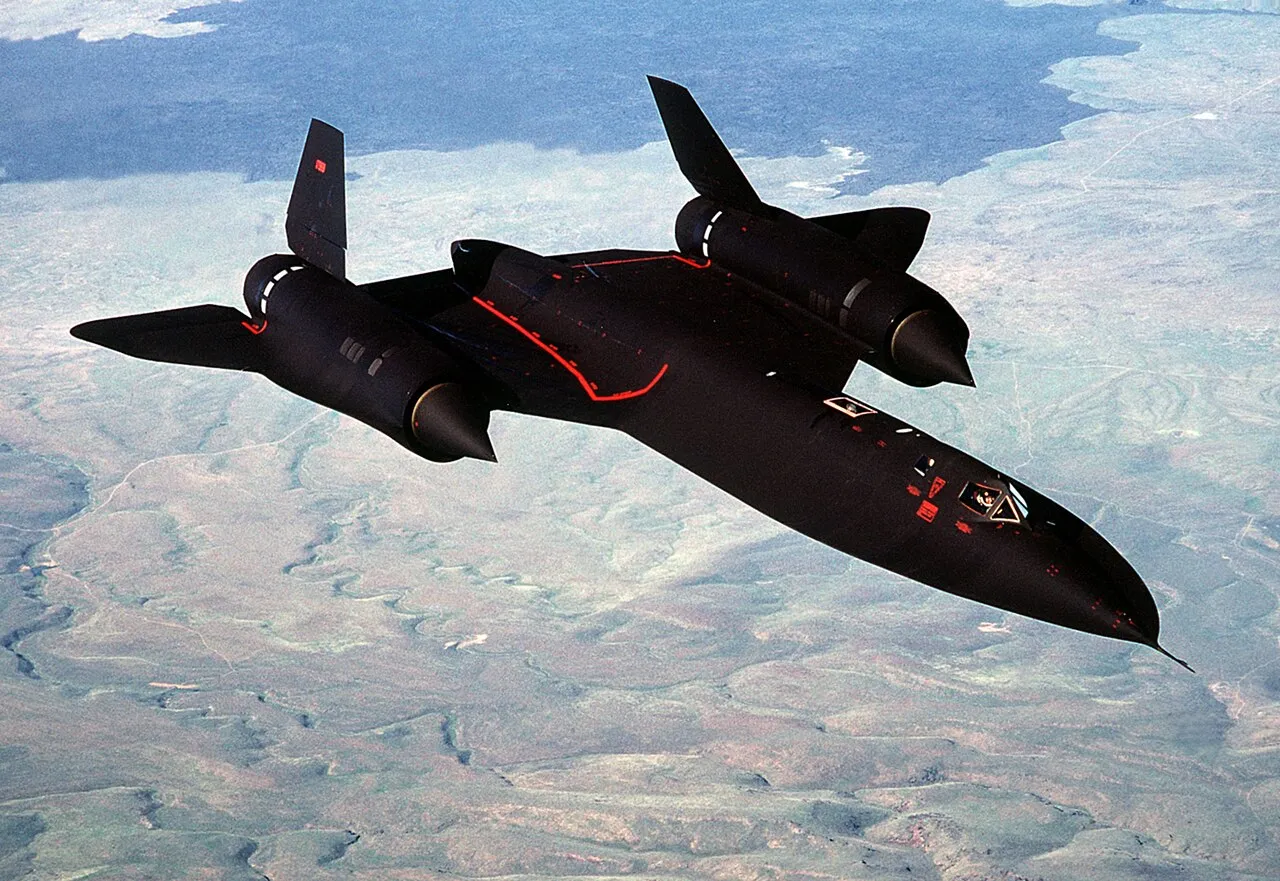
The SR-71 grew out of Lockheed’s earlier A-12, a reconnaissance aircraft developed for the Central Intelligence Agency under the Skunk Works programme led by Clarence “Kelly” Johnson, which first flew in 1962. The SR-71 kept the A-12’s basic shape but was stretched and made heavier to carry more fuel and a second crew member; the type first flew on 22 December 1964. Sustained flight at more than three times the speed of sound forced unusual design choices: the airframe was built mostly from titanium to withstand the heat generated by air friction, and it was designed to expand at operating temperature, which meant it leaked fuel on the ground until it reached cruise conditions and sealed itself. Its dark paint, which gave the type its nickname, helped radiate the heat built up at cruise speed1.
Specifications
The Blackbird measures 32.74 m long with a wingspan of 16.94 m and has a maximum take-off weight of 78,017 kg (172,000 lb). It is powered by two Pratt & Whitney J58 (JT11D-20) afterburning turbojets, engines whose inlet spikes and bypass system let them behave like ramjets at cruise speed. The aircraft carried a crew of two, a pilot and a reconnaissance systems officer1, seated in tandem.
Its listed cruise speed is Mach 3.2 at 85,000 ft (26,000 m), with a maximum speed of Mach 3.3 at around 80,000 ft (about 3,540 km/h, 1,910 kn); in flight testing the type reached a top speed of Mach 3.4. Its ferry range is given as 5,231 km (2,824 nmi), short of what most missions needed, so the SR-71 depended on in-flight refuelling from dedicated tanker aircraft to extend its reach beyond internal fuel1.
Variants
Lockheed built 32 Blackbirds in total: 29 SR-71A operational aircraft, 2 SR-71B trainers with a raised second cockpit for the instructor, and a single hybrid SR-71C assembled from the rear fuselage of a wrecked YF-12A interceptor and a spare SR-71 static-test forward fuselage1.
Operators and service
The SR-71 flew exclusively with the United States Air Force, which flew its first operational sortie on 21 March 1968 from Kadena Air Base in Okinawa. The Air Force based its Blackbirds at Beale Air Force Base in California, with forward operating locations at Kadena and at RAF Mildenhall in the United Kingdom, and flew reconnaissance missions over North Vietnam, Laos, North Korea, Cuba, Libya and Soviet coastlines. Cruising at around 85,000 ft (26,000 m), the aircraft put itself beyond the reach of most interceptors and missiles of the period. On its retirement flight in 1990 an SR-71 set a speed record from Los Angeles to Washington, D.C., and another aircraft had set a transatlantic record between London and New York in 1974, covering the route in 1 hour 54 minutes 56 seconds1.
The Air Force retired the type from front-line service in 1989 as satellite reconnaissance and budget pressure reduced the case for a costly crewed platform. Congress funded a brief reactivation between 1995 and 1998 before the Air Force retired the type again. NASA also operated Blackbirds for high-speed research, flying its last SR-71 until 19991.
Safety record
Of the 32 aircraft built, 12 were lost in accidents over the programme’s history, none to enemy action. During operations over Vietnam, North Vietnamese forces fired roughly 800 surface-to-air missiles at SR-71s without a single hit1; crews relied on outrunning and outclimbing a threat instead of manoeuvring to dodge it.
Similar aircraft
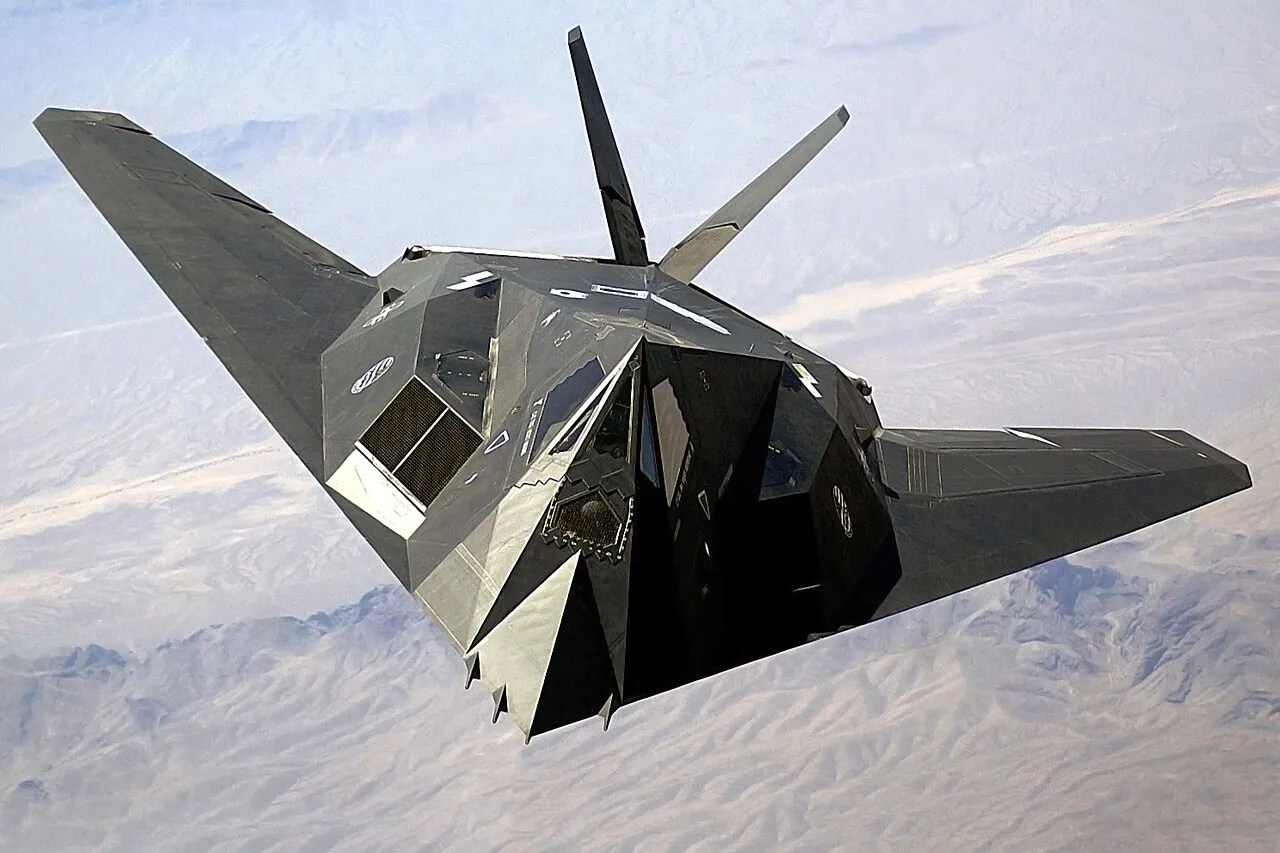
- Lockheed F-117 Nighthawk: another Skunk Works design built around survival over defended airspace, though by stealth rather than speed.
- Mikoyan-Gurevich MiG-25: the Soviet interceptor built to counter high-speed, high-altitude threats like the Blackbird, and the fastest operational jet fighter of its era.
- Lockheed U-2: the earlier Skunk Works high-altitude reconnaissance aircraft the SR-71 was meant to complement and eventually replace.