Contents
The Antonov An-32 is a twin-turboprop military transport built by the Antonov Serial Production Plant, an uprated derivative of the Antonov An-26 fitted with far more powerful engines for operators that need strong performance from short, rough or high-altitude airstrips. It first flew on 9 July 1976 and went on to become India’s standard tactical transport, while also serving air forces and a handful of civil cargo operators elsewhere. The type remains in service1 decades after it entered production.
Design and development
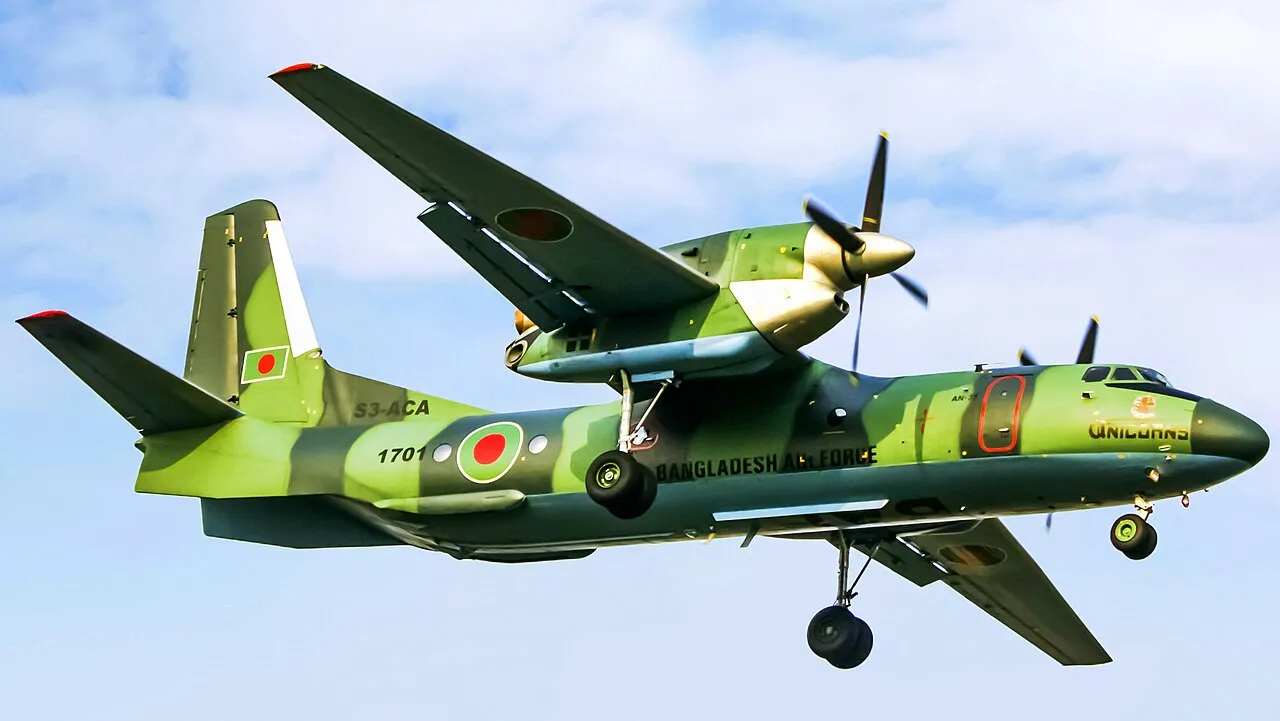
Antonov built the An-32 to fix a weakness of the An-26: in hot weather or at high elevations, the earlier aircraft’s engines ran short of power. The fix was to replace the An-26’s AI-24 engines with two Ivchenko AI-20 turboprops rated at 5,100 hp each, providing almost twice the power. The larger engines needed larger propellers, so Antonov raised the engines 1.5 m above the wing to keep the bigger blades clear of debris thrown up from rough, unprepared airstrips, giving the type its distinctive high-mounted nacelles. The wing also gained automatic leading-edge slats and large triple-slotted trailing-edge flaps, along with an enlarged tailplane1 to offset the extra engine weight and improve low-speed handling.
The first prototype flew on 9 July 1976, and Antonov publicly displayed the design at the Paris Air Show in May 1977. The extra power pays off in conditions the An-26 could not handle well: Antonov built the type for take-offs in temperatures up to 55 °C and at elevations up to 4,500 m. Production ran from 1982 to 2012, with about 373 aircraft built in total1.
Specifications
The An-32 is 23.78 m long with a wingspan of 29.2 m and a maximum take-off weight of 27,000 kg. Its two ZMKB Progress AI-20DM turboprops drive it to a cruise speed of around 470 km/h, with a range of about 2,500 km carrying a 3,700 kg payload and no fuel reserves. In the troop-carrying role it seats 42 paratroopers, or it can be configured for 24 stretcher casualties with three medical personnel instead; a cargo-configured aircraft is flown by a crew of four1.
Variants
Antonov and its operators adapted the basic airframe for several roles. The An-32B is an improved military version of the baseline aircraft, and the An-32B-100 is a modernised variant with a maximum take-off weight raised to 28.5 tonnes. The An-32P “Firekiller” is an aerial firefighting conversion that can discharge eight tonnes of water or retardant, while the An-32RE carries modernised avionics and an extended payload. A civil variant, the An-32A, was built for inter-plant transport of parts and assemblies1 rather than military use.
Operators and service
India is by far the type’s largest operator. The Indian Air Force ordered the An-32 on the strength of close Soviet-Indian relations under Leonid Brezhnev and Indira Gandhi, and took delivery of 125 aircraft; around 105 remain in service, with the fleet going through modernisation programmes to extend its life. Other military operators include Bangladesh, Colombia, Peru, Sri Lanka, Sudan and Ukraine, which fly it for cargo transport on short and medium-range routes, air-dropping, passenger carrying, medical evacuation, firefighting, skydiving and paratrooping1.
A small number of civil operators also fly the type: there were about 25 civil An-32s in service in 2016, with Peru’s Aero Transporte S.A. running the largest civil fleet1.
Safety record
The An-32’s long military career has brought several serious accidents. In 1986 an Indian Air Force An-32 disappeared over the Arabian Sea with seven people aboard, and no wreckage was ever found. A 1996 crash in Kinshasa after a failed take-off, blamed on suspected overloading, killed about 237 people on the ground, making it one of the deadliest accidents involving the type by ground casualties. In 1998 a Sudanese Air Force An-32 crashed after overrunning the runway, killing 26 of the 57 aboard, including the country’s then vice president, Zubair Mohamed Salih. An Indian Air Force aircraft crashed near Mechuka in 2009, killing 13, and prompted a $400 million agreement with Ukraine to modernise the Indian fleet. Most recently, an Indian Air Force An-32 vanished over the Bay of Bengal in 2016 with 29 people aboard; its wreckage was located at a depth of about 3,400 m in January 20241.
Similar aircraft
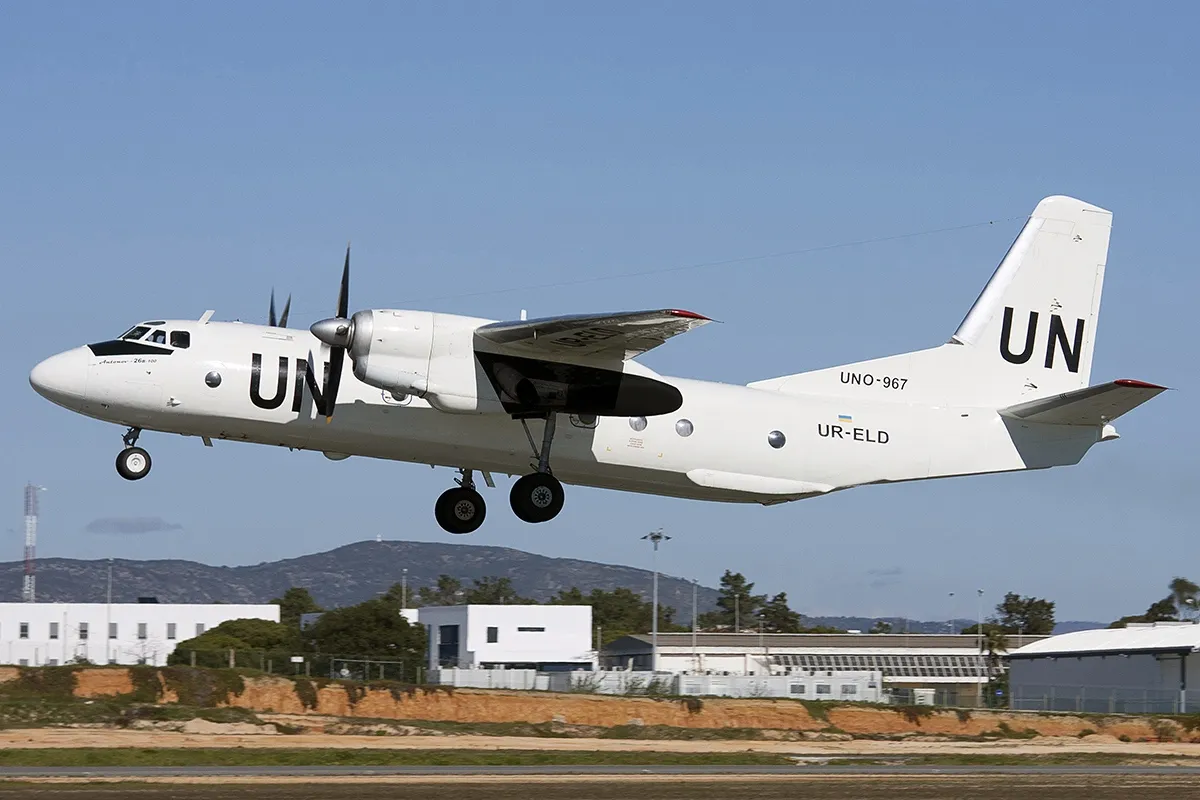
- Antonov An-26: the Soviet twin-turboprop transport the An-32 was derived from, sharing its basic airframe but with less powerful engines.
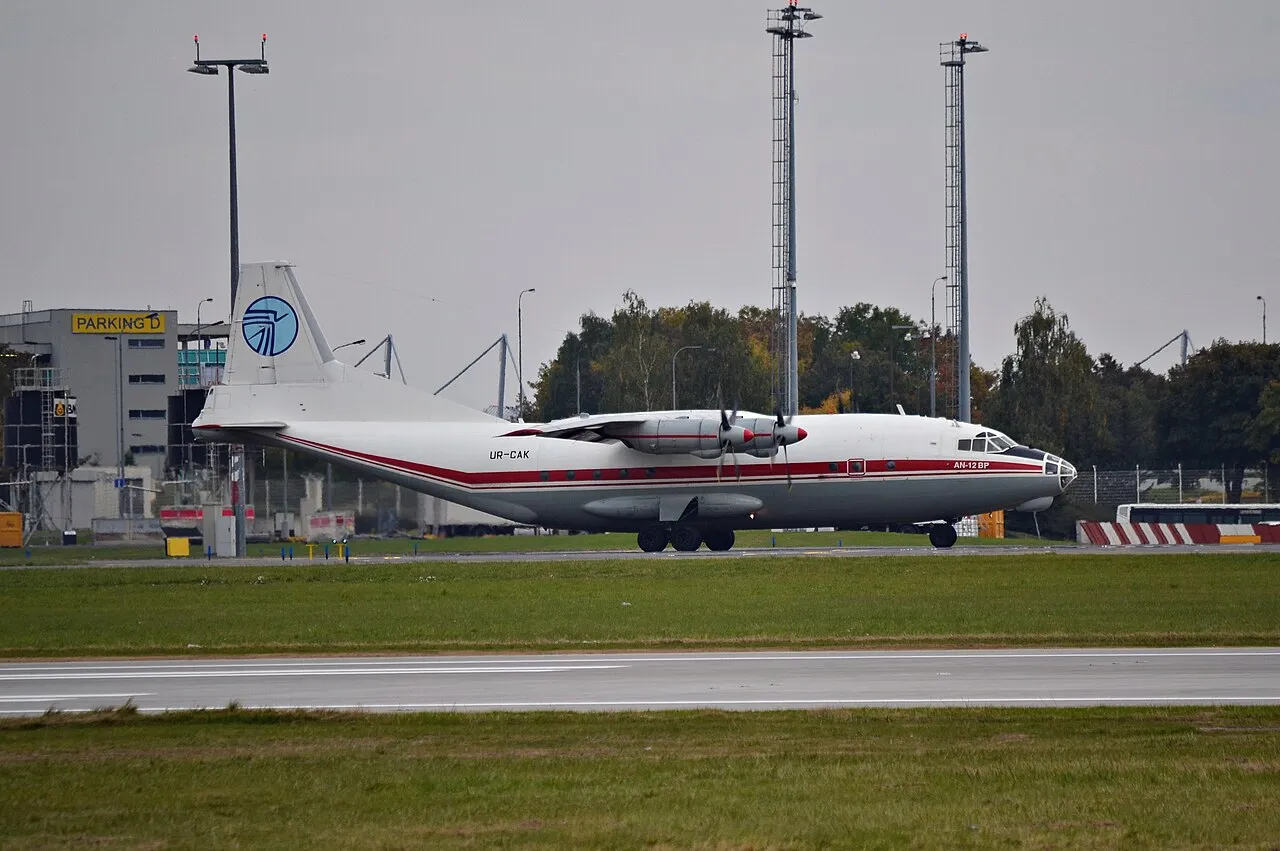
- Antonov An-12: a larger, four-engine Antonov military transport of the same Soviet lineage, built for heavier tactical airlift loads.