Contents
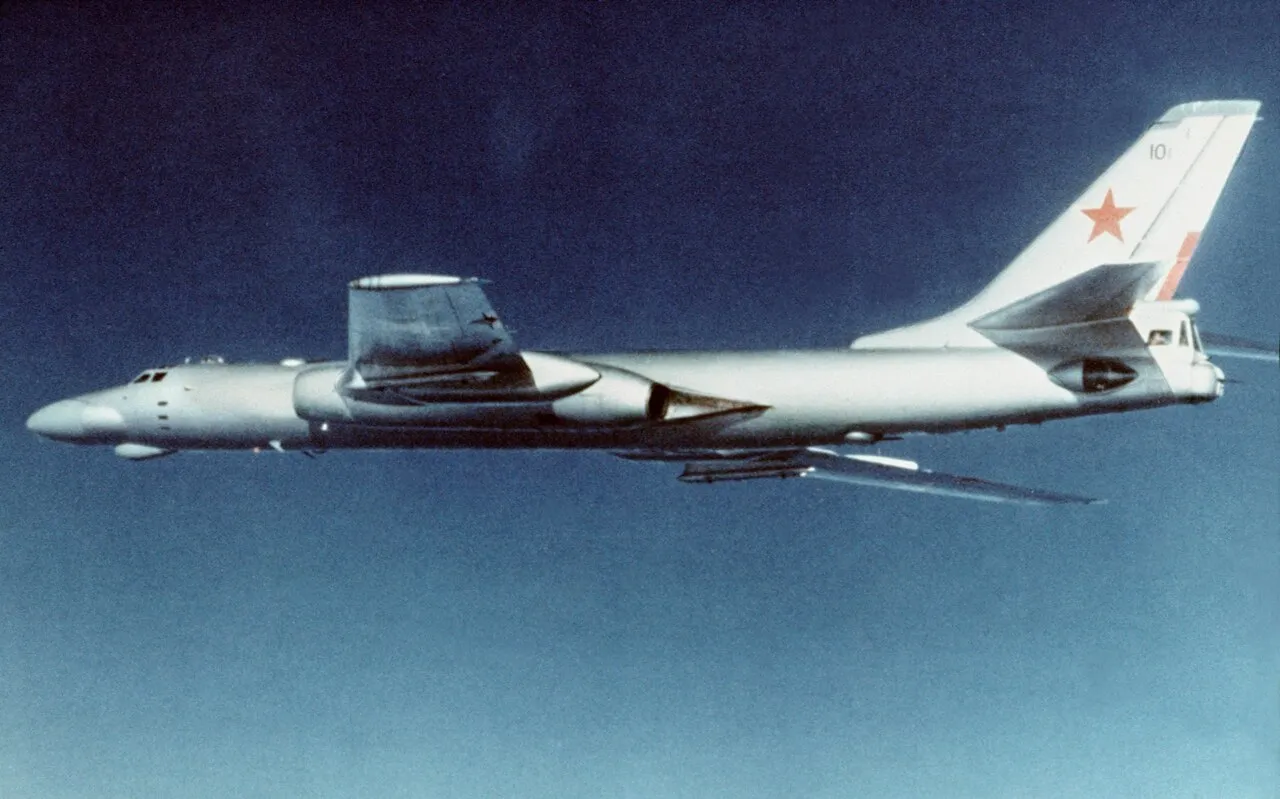
The Tupolev Tu-16, NATO reporting name Badger, is a twin-jet Soviet bomber that first flew on 27 April 1952. Tupolev’s design bureau built it to give the Soviet Union a jet-powered heavy bomber once the Mikulin AM-3 turbojet made one possible, replacing the Tu-4, a reverse-engineered copy of the American B-29. Built in 1,509 examples between 1952 and 1962, it served as a bomber, missile carrier, maritime patroller, tanker and electronic-warfare platform, and its Chinese-built derivative, the Xian H-6, remains in service today1.
Design and development
The Tu-16 began as the Tu-88 prototype, developed under Andrei Tupolev’s bureau from 1950 and flown for the first time on 27 April 1952. It won a competition against the Ilyushin Il-46 and was approved for production in December 1952, entering service with Soviet Frontal Aviation in 1954. The type was built at state aircraft plants in Kazan, Kuibyshev and Voronezh, and its airframe and engines proved durable enough that the aircraft remained in some operational use for close to seventy years1.
Power came from two Mikulin AM-3M-500 turbojets, each rated at 93.2 kN of thrust. The design’s significance to Soviet nuclear strategy showed early: in 1955 a Tu-16 dropped the RDS-37, the Soviet Union’s first thermonuclear weapon, over the Semipalatinsk Test Site, and a decade later China used a Tu-16 for its own first airborne nuclear weapon test, on 14 May 19651.
Specifications
The Tu-16 is 34.8 m long with a wingspan of 33.0 m, flown by a crew of six to seven. Its maximum take-off weight is 79,000 kg. Ferry range is about 7,200 km, though missile-armed variants had a combat radius of roughly 1,800 km. It carried a conventional bomb load of up to 9,000 kg or a range of nuclear weapons1.
Variants
The basic bomber, Badger-A, was built as 453 nuclear-capable Tu-16A aircraft. The missile-carrying Badger-B (Tu-16KS), armed with two AS-1 Kennel anti-ship missiles, numbered 107 aircraft, while the naval Badger-C (Tu-16K-10), carrying a single AS-2 Kipper missile, numbered 216. Reconnaissance and electronic-intelligence versions ran from Badger-D through Badger-F, Badger-H, Badger-J, Badger-K and Badger-L, and the Badger-G (Tu-16K and Tu-16KSR) carried external air-to-surface missiles such as the AS-5 Kelt and AS-6 Kingfish. Other conversions included the Tu-16Z, Tu-16N and Tu-16NN aerial tankers, the 76-strong Tu-16T torpedo bomber, the Tu-16R reconnaissance aircraft, the Tu-16Ye electronic-warfare platform and the Tu-16S, which carried a search-and-rescue lifeboat. China’s domestically built derivative, the Xian H-6, first flew in its fully Chinese-produced form in December 1968, and modern H-6K variants were still in production as of 20201.
Operators and service
The Soviet Air Force and Naval Aviation flew the Tu-16 throughout the Cold War; Russia retired its operational examples by 1995, though manufacturers and test facilities kept a few flying until 2001-2002. Post-Soviet states that inherited aircraft, including Armenia, Azerbaijan, Belarus, Georgia and Ukraine, retired most of theirs by 1995 as well1.
Egypt was the type’s largest export operator, organising three squadrons under Air Group 65 by 1966, and flew it in the Six-Day War, the Yom Kippur War and beyond, retiring it only in 2000. Iraq used Tu-16 and Tu-16KSR-2-11 variants to bomb Israel during the Six-Day War and, later, Iranian troops and Tehran during the Iran-Iraq War; its Chinese-built H-6 variants fired C-601 anti-ship missiles during the Tanker War, and at least three Iraqi Tu-16s were destroyed on the ground during Operation Desert Storm. Indonesia received 12 Tu-16 bombers, 12 Tu-16KS-1 missile carriers and two Tu-16R reconnaissance aircraft from 1961, based mainly at Iswahjudi Air Force Base in East Java, before the fleet was grounded in 1969 and withdrawn in 1970. China began receiving Tu-16s in 1958 and licensed its own production the same year as the Xian H-6; at least 120 H-6s remained in service1, making it the type’s last operational line.
Today the original Tu-16 is retired from Russian service, while the Chinese-built Xian H-6 derivative remains in service1.
Safety record
The Tu-16’s long service recorded several fatal accidents. A Soviet Badger-F crashed into the Norwegian Sea on 25 May 1968 after buzzing the carrier USS Essex, clipping a wing into the water on its final pass and killing the whole crew. A modified Tu-16 flying laboratory crashed on 1 February 1971 while testing a new jet engine, killing its crew, among them the test pilot Amet-khan Sultan. On 28 August 1978, an early-model Tu-16 crashed on Hopen Island in Svalbard, killing all seven aboard, and on 27 June 1980, a Tu-16 on a “Tokyo Express” flight crashed near Komatsu Air Base in the Sea of Japan with no survivors. In combat, Israeli air strikes destroyed 23 of Egypt’s 25 Tu-16s on the ground during the opening of the Six-Day War in 19671.
Similar aircraft
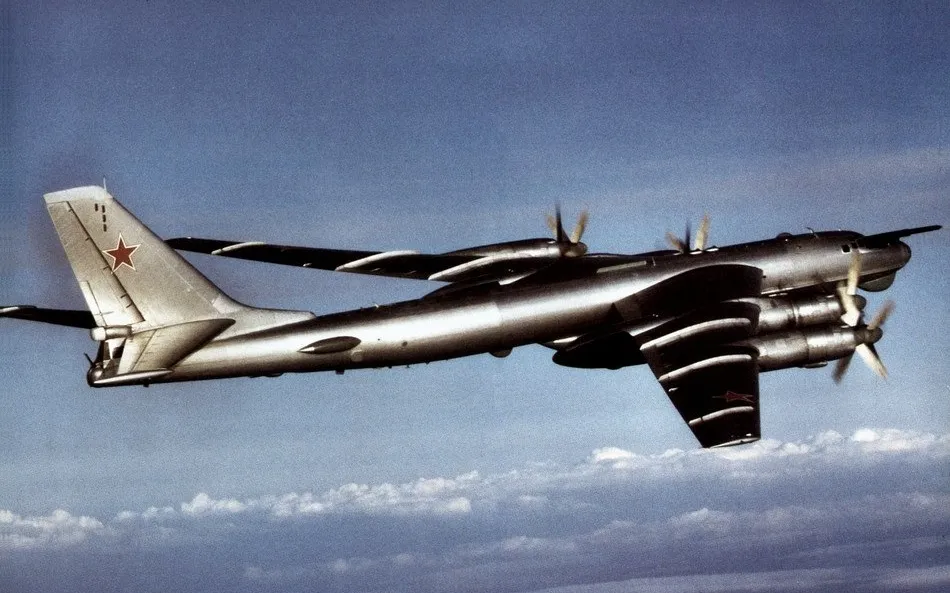
- Tupolev Tu-95: the contemporary Soviet turboprop strategic bomber1 that served alongside the Tu-16 and, unlike it, remains in Russian front-line use; see the Tu-95 page.
- Boeing B-47 Stratojet: the American swept-wing jet bomber of the same generation, developed to the same kind of brief on the other side of the Cold War.
- Myasishchev M-4: a contemporary Soviet jet bomber built for longer-range strategic missions than the Tu-16.
_Special_Flight_Squadron_Rossiya_(Russian_Government)_VKO_UUWW_(32966735944)_ZM3Jey.webp)