Contents
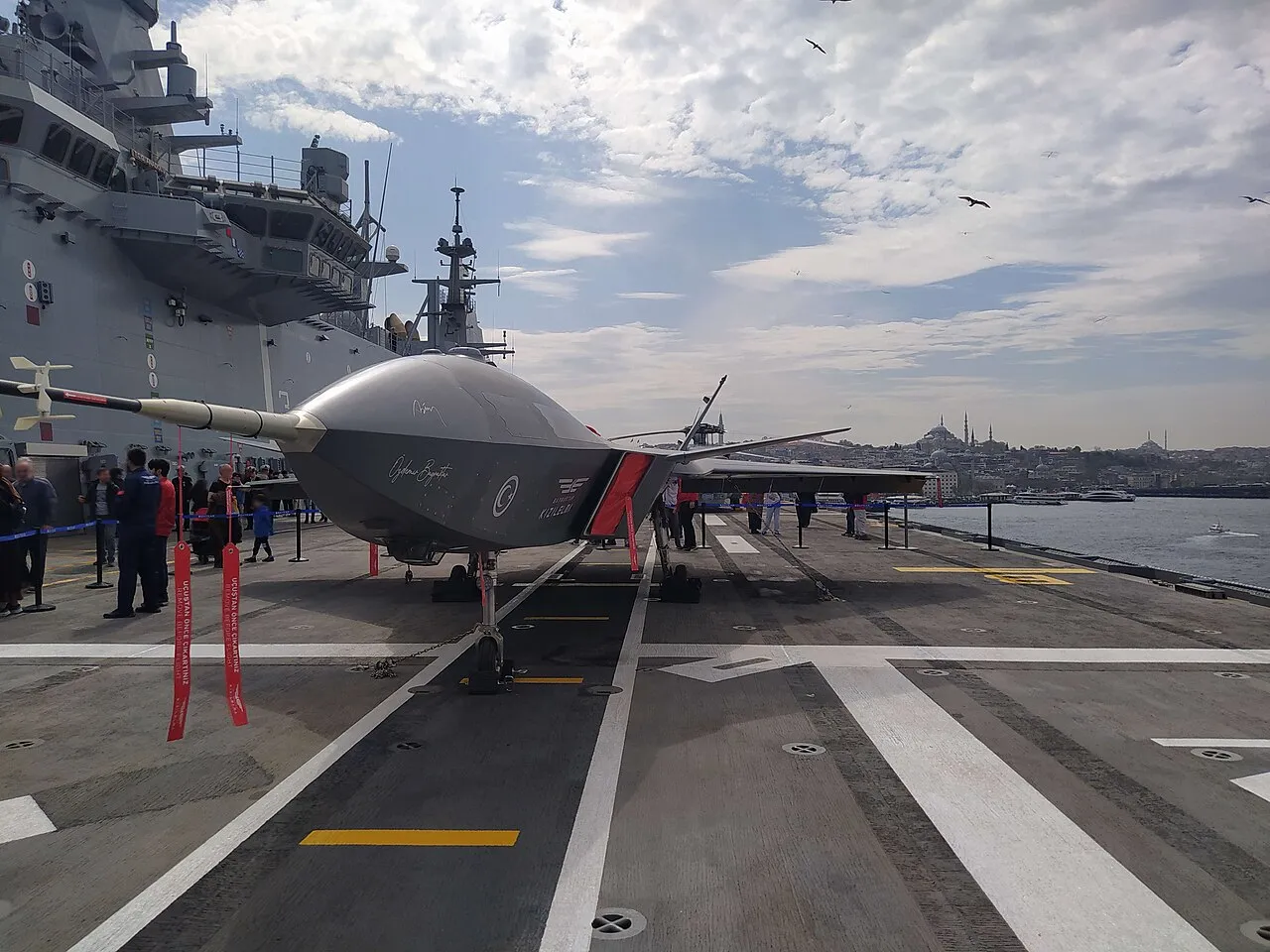
The Bayraktar Kızılelma is an unmanned fighter aircraft developed by Baykar that builds on the company’s earlier Bayraktar drones. Baykar stresses its air-to-air capabilities and a low radar cross-section that reduces detectability1, and says work is ongoing to let it operate from aircraft carriers. Its name means “Red Apple” in English2. Baykar launched the project in 20213 with its own equity, and the aircraft made its maiden flight on 14 December 2022. In August 2025 Baykar began serial production4, with deliveries to the Turkish Armed Forces scheduled for 2026.
Design and development
The project was first known as Project MIUS, from the Turkish for Combatant Unmanned Aircraft System, and its first conceptual studies started in 2013. The first design images were shared with the public in July 20212, and the name Kızılelma was made public in March 2022.
The first aircraft, tail number TC-ÖZB, rolled off the production line on 14 November 20223 and moved to the AKINCI Flight Training and Test Center in Çorlu. Its first flight there lasted 18 minutes. At the time, Anadolu Agency reported a target take-off weight of 6 tonnes5 and a planned payload of 1,500 kg.
The third prototype, considered the production prototype, first flew on 25 September 20242 from Çorlu, with an afterburning engine, aerodynamic improvements and an updated avionics architecture. Baykar says the new engine will let it approach the speed of sound3, and that aerodynamic improvements will let it manoeuvre much better at high speeds.
In December 20256 the third and fifth prototypes flew what Anadolu Agency calls the world’s first autonomous close-formation flight by two unmanned fighter aircraft. On 22 June 20262 it completed the first phase of live flight trials under the Leonardo–Baykar K-SWARM programme, rejoining a Leonardo M-346 Master after take-off and changing formation on commands from the M-346 crew.
Specifications
Baykar lists a length of 14.5 m and a wingspan of 10 m, with a height of 3.5 m. It gives a maximum take-off weight of 8,500 kg and a payload capacity of 1,500 kg. The manufacturer quotes a cruise speed of Mach 0.6 and a top speed of Mach 0.9, an endurance of 3+ hours and a combat radius of 500 nautical miles. Its service ceiling is 40,000 feet1, while its operational altitude is 25,000 feet. On its 12th test flight, on 17 June 20232, it reached an altitude of 9.5 km.
The airframe has a turbofan engine fed by two air inlets, two vertical stabilizers for yaw control and coupled canard controls. The first prototypes were to reach subsonic speeds with AI-25TLT engines2, and later ones were expected to be supersonic with AI-322F engines. The production aircraft carries a modified Ukrainian AI-322F4. Take-off, landing, cruise and taxi are autonomous1, and it is controlled over line-of-sight and beyond-line-of-sight links.
Sensors and weapons
Baykar lists an electro-optical targeting system, an infrared search and track system and a multi-mode AESA radar as its sensors. These are Aselsan’s MURAD AESA radar, KARAT IRST and TOYGUN EOTS. Its listed weapons are air-to-air missiles, INS/GPS guided and laser-guided munitions1, standoff weapons, cruise missiles and mini cruise missiles. Published specifications give it two internal and six external stations2.
In its first live-fire test, the third prototype flew two sorties at Çorlu and struck its targets with an ASELSAN TOLUN munition3 and then a ROKETSAN TEBER-82 guidance kit; the tests took place on 8 October 20252. In November 2025, off the coast of Sinop, it struck a target aircraft designated by its MURAD radar with a GOKDOGAN beyond-visual-range air-to-air missile. On 11 July 2026, Baykar said, the serial production aircraft with tail number S2 launched a JET-230 missile from more than 120 km6 and hit a target over the sea.
Operators and combat use
Baykar says the Kızılelma is targeted to enter the inventory in 20263, and the Turkish Air Force and Turkish Navy are listed as its future operators. It was developed to take off and land on short-runway ships5 such as TCG Anadolu. It is designed to take off from and land on an amphibious assault ship such as TCG Anadolu without any need for a catapult2.
In May 2026 Baykar signed a framework agreement with the Indonesian company Republikorp for an initial batch of 12 Kızılelma-C aircraft, to be delivered from 2028, with options that could raise the total to 60. In October 2026 Indonesia’s Ministry of Defense said there was no procurement contract or acquisition commitment for the Indonesian military. The Pakistan Air Force has reportedly expressed interest2 in buying it, but no official deal was signed.
Variants
Baykar lists the versions KIZILELMA-A, KIZILELMA-B, KIZILELMA-CA, KIZILELMA-CB and KIZILELMA-D1.
- Kızılelma-A: the initial, subsonic version2, powered by the AI-25TLT.
- Kızılelma-B: planned to fly at supersonic speeds on a single AI-322F2.
- Kızılelma-C: a planned twin-engined version with two AI-322F engines2.
Similar drones
- TAI Anka-3: the other Turkish jet-powered stealth UCAV, a flying wing from Turkish Aerospace Industries7; the Kızılelma has canards and two vertical stabilizers2.
- Dassault nEUROn: a European stealth demonstrator that will not enter serial production8, while the Kızılelma entered serial production in 20254.
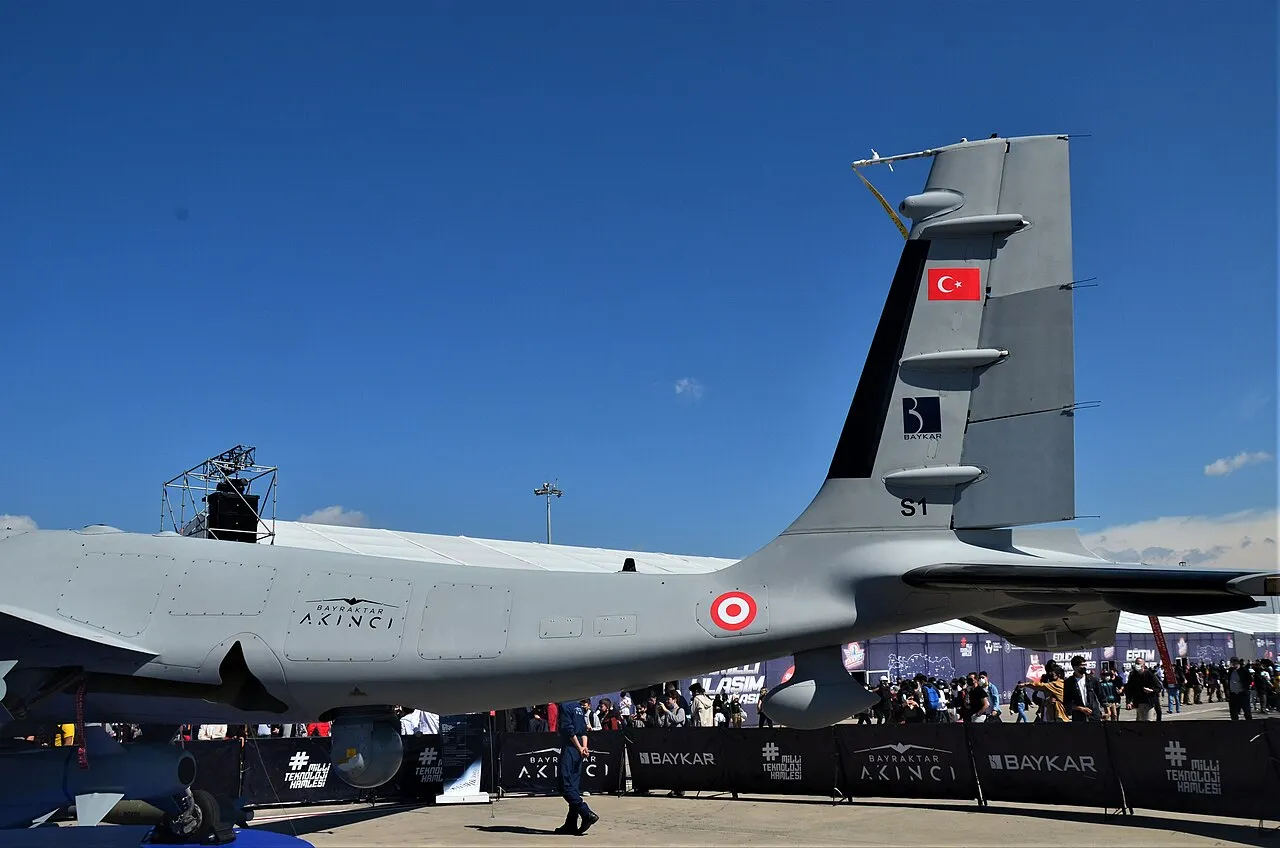
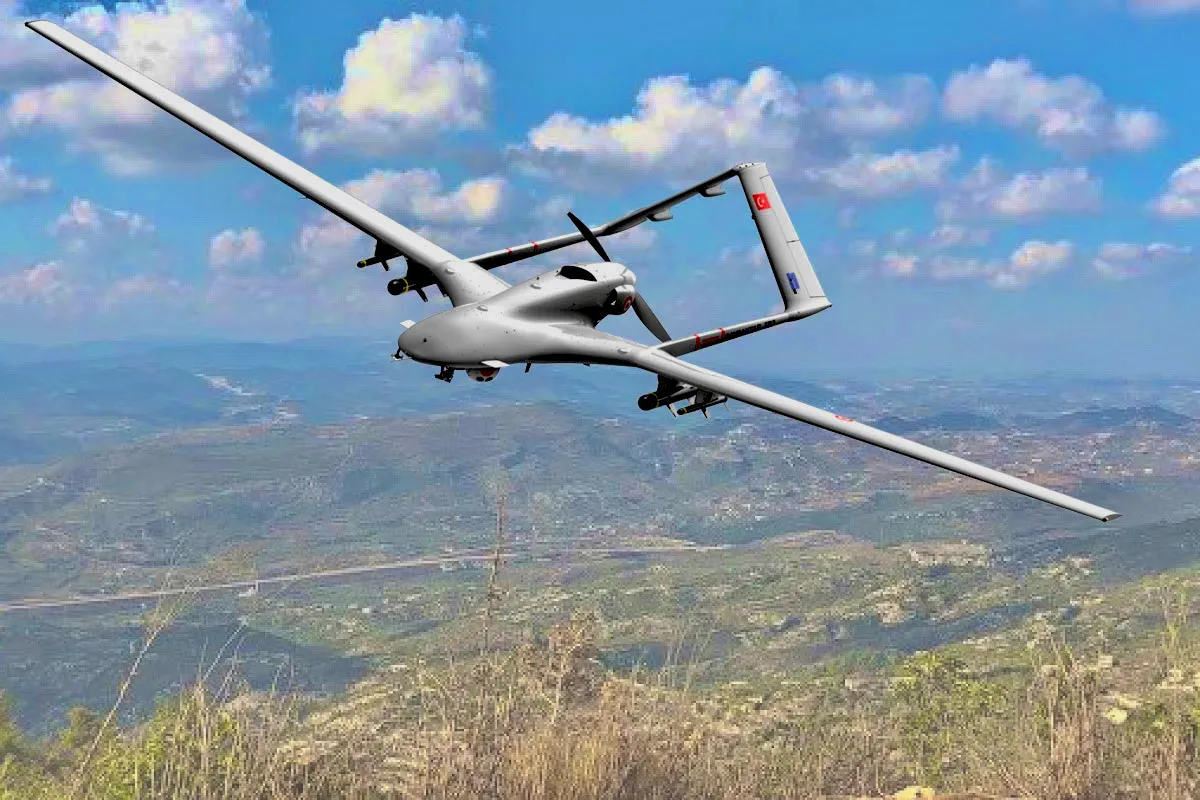
- Baykar Bayraktar Akinci: Baykar’s UCAV with two turboprop engines9, with which the jet-powered Kızılelma flew in formation at TEKNOFEST 20233.