Contents
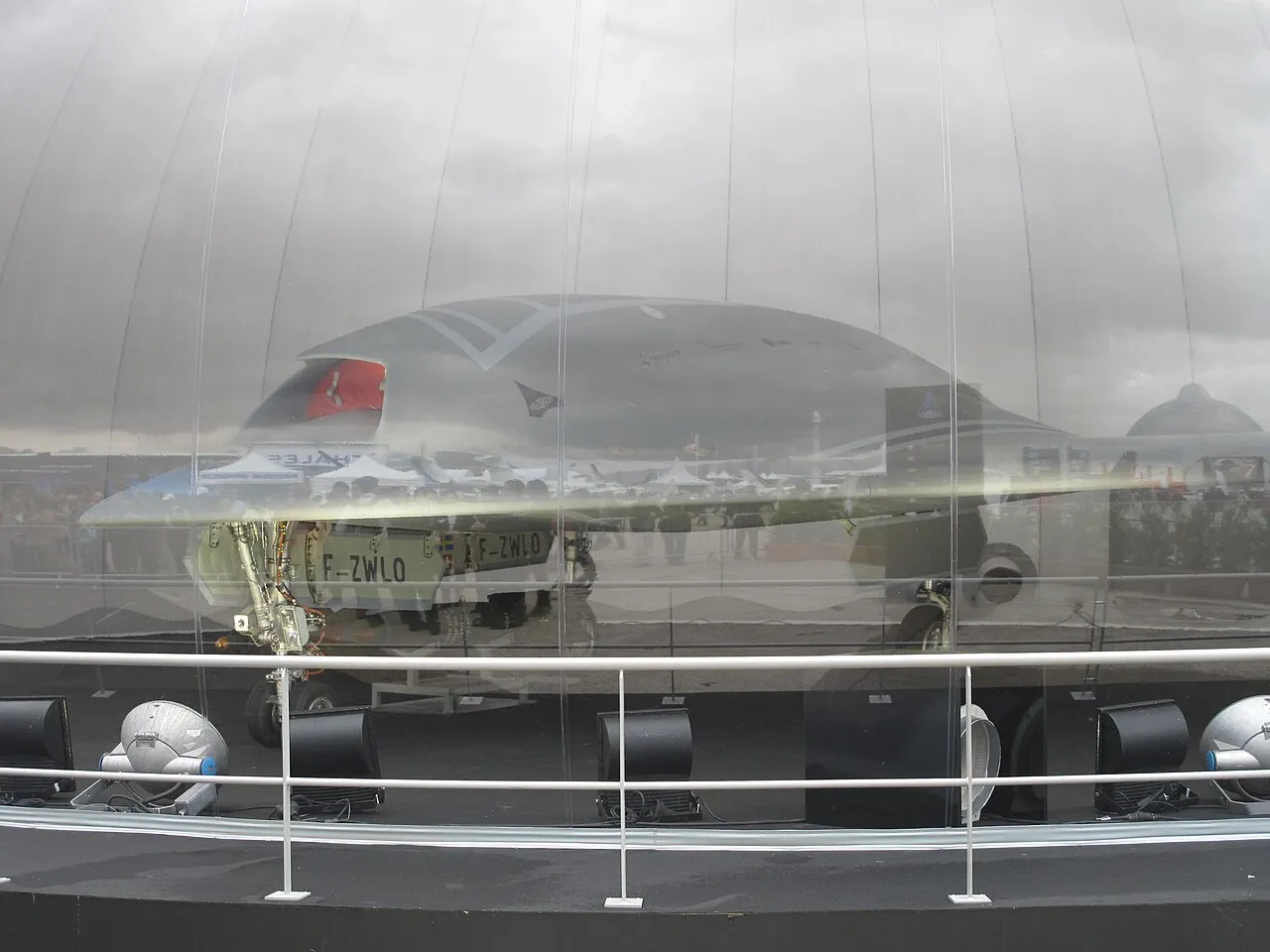
The Dassault nEUROn is a European full-scale demonstrator for an uncrewed combat aerial vehicle, developed by an industrial team led by Dassault Aviation with Finmeccanica-Alenia Aermacchi, Saab, Airbus Defence and Space, RUAG and HAI. It is a collaborative programme between France, Italy, Sweden, Spain, Greece and Switzerland meant to mature technologies for future military uncrewed aircraft. Leonardo describes it as dedicated to the demonstration of key technologies1 for future manned and uncrewed combat aircraft. The demonstrator made its first flight on 1 December 20122.
Design and development
In 1999 Dassault launched its LOGIDUC stealth drone programme, which produced the AVE-D Petit Duc, flown in July 2000 as the first stealth UAV in Europe, and the AVE-C Moyen Duc of 2001. Its third step, the full-scale “Grand Duc”, was renamed nEUROn as European partners joined the French project to reduce its development cost. Under pressure from the partners, especially Sweden and Saab, the design was transformed into a demonstrator of smaller single-engine technology3 that will not enter serial production.
The French procurement agency DGA, acting as programme executive for the participating countries, entrusted development of the demonstrator to Dassault Aviation and its European partners. The contract is valued at €405 million3, and in February 2006 the agency announced that France would provide half of that budget. Alenia Aermacchi was the first industrial partner, with a 22% share of the programme2 and responsibilities at system and sub-system level. The demonstrator rolled out on 20 January 20124, after five years of design, development and static testing.
Leonardo lists the programme’s demonstration goals as designing a stealth platform with low radar cross section and low infrared signature, weapon delivery from an internal bay, and an autonomous target detection and recognition demonstration. It adds that, although not a prototype2, the nEUROn may well be considered representative of future combat UAVs.
Specifications
The nEUROn is a flying wing stealth UCAV. Published dimensions differ: a 2006 Saab release described a demonstrator about 10 m long by 12 m wide and weighing 5 tons, while other published specifications give a length of 9.5 m and a wingspan of 12.5 m; it is wider than it is long. Those specifications list an empty weight of 4,900 kg and a gross weight of 7,000 kg3.
It flies on a single Rolls-Royce/Turboméca Adour of 40 kN thrust, and Dassault states this engine, adapted from the version used in the SEPECAT Jaguar, will be replaced in a production version by a more powerful engine based on Snecma’s M88 from the Rafale. The listed performance is a maximum speed of 980 km/h and a service ceiling of 14,000 m. Dassault’s estimated unit cost for a derived production UCAV is €25 million3.
Sensors and weapons
Alenia Aermacchi’s contribution includes the Smart Integrated Weapon Bay1, a system that allows automatic detection and recognition of the target in stealth mode and sends an attack approval request to the ground station commander before weapons are launched. Thales supplied a data link compliant with STANAG 70853 and the command interface.
The listed armament is two 500 lb guided bombs3. In trials at Vidsel in Sweden it made its first release of a weapon from the internal bay5 on 2 September 2015.
Operators and combat use
Dassault managed the initial test flying, and the DGA took over flight test management on 31 October 2014. It was on display at the Paris Air Show in 2013, where it did not fly3 because European civil aviation authorities were reluctant to let UAVs fly out of closed airspace. The DGA’s initial campaign ended on 26 February 20155, the date of the drone’s 100th flight.
In Italy the demonstrator flew 12 sorties from Decimomannu4 to assess its low radar cross section and low infrared signature, against ground-based and airborne radar, the latter on a Eurofighter Typhoon. It then went to Vidsel in Sweden5 for further low-observability trials. In its first test programme, from December 2012 to September 2015, it flew 123 times6.
On 6 July 2016 the DGA flew its first sea trials with the aircraft carrier Charles de Gaulle: the drone flew for about an hour at some 1,000 feet6, with and without Rafale fighters, but did not land on the carrier. In early 2017 it took part in electromagnetic signature measurement trials at the DGA facility at Bruz, near Rennes. In a campaign reported in January 2019, it was flown against two Spanish Air Force Eurofighter Typhoons to assess how well their radar and infrared search and track sensors could detect it; by then it had flown more than 150 times. At that point it was in its fourth national flight test campaign5, flown from the DGA test site at Istres, and further trials against French naval vessels, including the Charles de Gaulle, were expected in 2019.
Variants
As a technology demonstrator, only one vehicle was to be produced. It is the third Dassault stealth UAV prototype, following the AVE-D Petit Duc and the AVE-C Moyen Duc. The French Ministry of Armed Forces planned to invest €128 million in 2024 to develop an unmanned combat aerial vehicle based on the nEUROn demonstrator. Earlier, in November 2014, France and the United Kingdom announced a two-year feasibility study3 that could combine the experience of the Taranis and nEUROn programmes into a Future Combat Air System.
Similar drones
- BAE Systems Taranis: a British UCAV demonstrator primarily developed and built by BAE Systems7, similar in size to the Hawk trainer; Britain pursued it alone, unlike the six-nation nEUROn programme.
- Boeing X-45: an American J-UCAS demonstrator; consortium statements envisioned the nEUROn as a competitive system with the X-45C3 or Northrop Grumman’s X-47B.
- Boeing Phantom Ray: an American flying wing developed by Boeing that first flew in April 20118, based on the X-45C prototype; the nEUROn, by contrast, comes from a European industrial team.