Contents
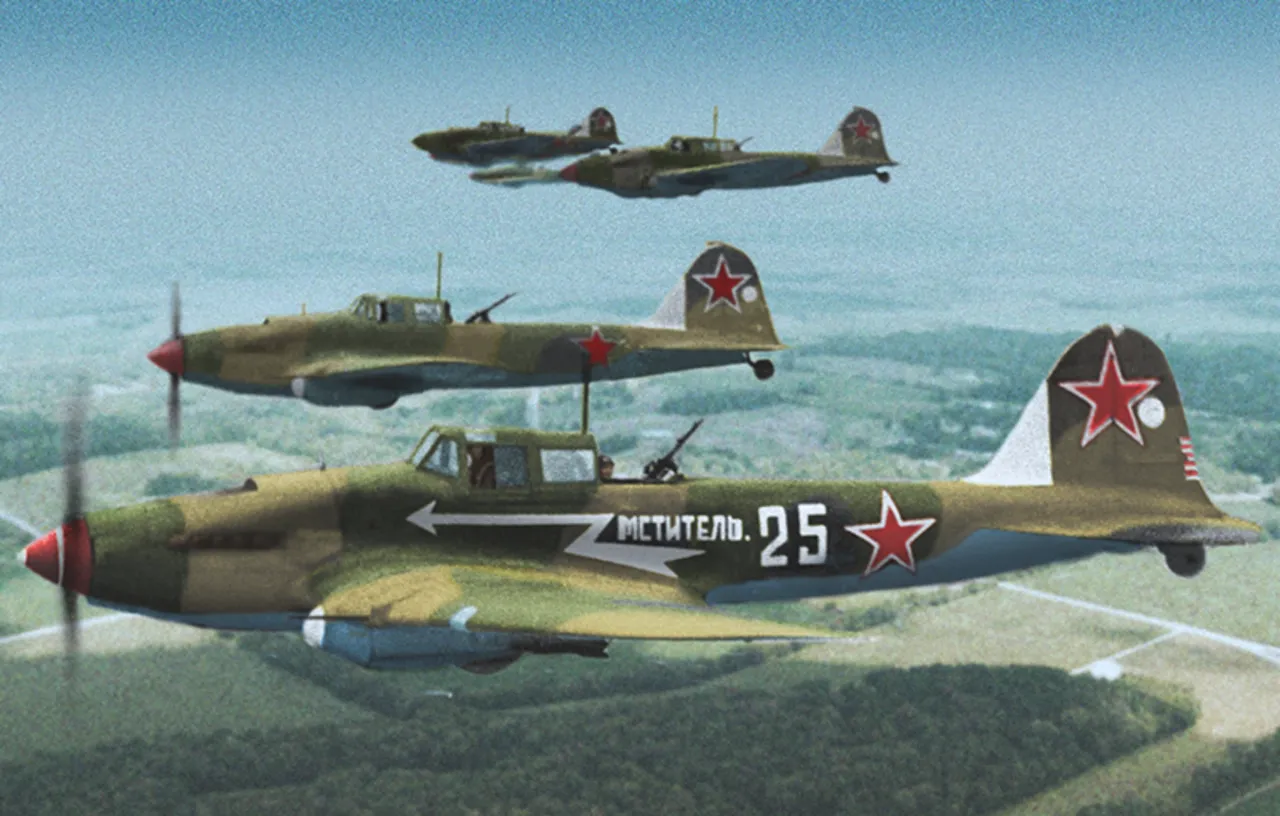
The Ilyushin Il-2, nicknamed the Sturmovik, was built by the Soviet Ilyushin design bureau as a heavily armoured ground-attack aircraft for the Red Army. It first flew on 2 October 1939 and went on to serve throughout the Second World War on the Eastern Front, attacking tanks, troops, artillery and transport columns in direct support of Soviet ground forces1.
Design and development
The Il-2’s defining feature was a load-bearing armoured shell that formed the front of the fuselage, protecting the engine, cockpit, radiators and fuel tanks from ground fire rather than relying on separate armour plates bolted onto a conventional structure. That design let the aircraft absorb substantial battle damage and still return to base, a quality that made it prized by Soviet ground forces and feared by the German troops it attacked, who called it the “Cement Bomber” or “Black Death”1.
The original single-seat version, rushed into service after Germany’s invasion in 1941, proved dangerously vulnerable to fighter attack from behind, since the pilot had no way to defend against an enemy approaching from the rear. Ilyushin responded with the two-seat Il-2M3, which added a rear gunner’s position with a defensive machine gun, at the cost of some speed and manoeuvrability. The armoured shell itself weighed about 700 kg, around 15% of the aircraft’s gross weight, built from riveted steel plating 5 to 12 mm thick around the fuselage and cockpit1.
Specifications
The figures below describe the Il-2M3 production variant, the definitive two-seat version built in the largest numbers. It was 11.65 m long with a wingspan of 14.6 m, and its maximum take-off weight was 6,360 kg. Power came from one Mikulin AM-38F liquid-cooled V-12 piston engine, giving it a combat range of about 765 km at a cruising speed of 275 km/h. The aircraft carried a crew of two, a pilot and a rear gunner. Armament comprised two 23 mm VYa-23 cannon and two 7.62 mm ShKAS machine guns firing forward, plus one 12.7 mm Berezin machine gun for the rear gunner; for ground attack it could carry eight RS-82 or four RS-132 rockets, or up to six 100 kg bombs in wing bomb bays1.
Variants
Soviet factories built 36,183 Il-2s between 1941 and 1945; together with its successor the Il-10, the combined total of 42,330 airframes makes the Il-2 family the most-produced military aircraft design in aviation history. Production moved from the original single-seat version to the two-seat Il-2M3 described above, and the type was further refined into the Il-2 Type 3, which swept the outer wing leading edges back by 15 degrees to shift the aerodynamic centre rearward after the rear gunner’s weight had moved it forward, and standardised on the 23 mm VYa cannon in place of the earlier 20 mm guns. A dedicated anti-tank derivative carried 37 mm cannon for attacking armoured vehicles, and the Il-2 was developed into the Ilyushin Il-101.
Operators and service
The Il-2 flew for the Soviet Union’s Red Army Air Force as its principal ground-attack type on the Eastern Front from 1941 until the war’s end in 1945. Its close-support attacks against German armour and infantry columns earned it a central place in Soviet accounts of the war, and Joseph Stalin himself reportedly pressed factories hard to raise output of the type during the war. After 1945, surviving aircraft continued in limited service with a small number of Soviet allies, with Bulgaria and Yugoslavia the last operators to retire the type, in 19541.
Safety record
Flying low and slow over heavily defended front lines made the Il-2 a frequent target: Soviet forces lost 10,762 Shturmoviks between 1941 and 1945, a total that includes the related Il-10, with annual losses of 533 in 1941, 1,676 in 1942, 3,515 in 1943, 3,347 in 1944 and 1,691 in 1945. Even so, the aircraft’s armour let many crews survive encounters that would have destroyed a conventional attack aircraft; pilot Anna Yegorova, one of the war’s most decorated female pilots, flew 243 Il-2 missions, was presumed dead and awarded the Gold Star of Hero of the Soviet Union posthumously after being shot down, then survived the war in a German prisoner-of-war camp1.
Similar aircraft
- Junkers Ju 87: Nazi Germany’s dedicated dive bomber, the Il-2’s opponent in the ground-attack role on the same Eastern Front.
- Republic P-47 Thunderbolt: a heavily built American fighter that, like the Il-2, was also widely used for ground attack in the European theatre.
_Z2jNuNL.webp)