Contents
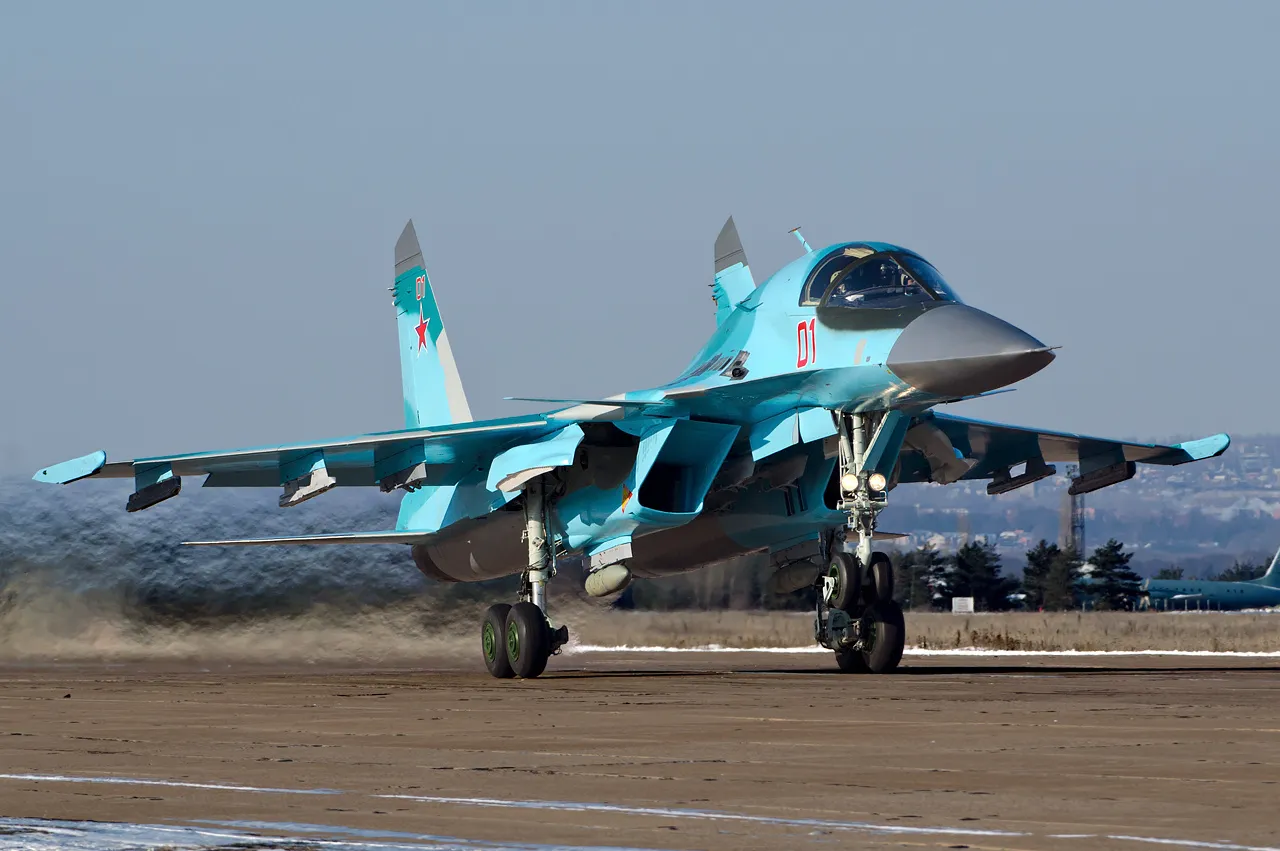
The Sukhoi Su-34 is a twin-engine strike fighter built to replace the Sukhoi Su-24 in the tactical bombing role1. Sukhoi developed it from the Su-27 air-superiority fighter’s airframe, and it is flown today by Russia’s Aerospace Forces for precision strikes against ground targets. Known to NATO by the reporting name “Fullback,” the type is easy to tell apart from other Su-27 derivatives by its flattened, armoured nose, which gives the crew side-by-side seating instead of the tandem cockpit used on most fighters.
Design and development
Sukhoi began work on a tactical strike aircraft to succeed the Su-24 in the mid-1980s, basing the new design on the Su-27 airframe, and specifically on the T10KM-2 naval trainer variant. The project, then designated T-10V, was shelved in the late 1980s amid the Soviet Union’s political upheaval before Sukhoi carried it through to a flying prototype. That prototype, flown by test pilot Anatoliy Ivanov, made its first flight on 13 April 1990; Western intelligence initially mislabelled it the “Su-27KU,” though Sukhoi’s own designation was Su-27IB, for “fighter-bomber.” A second prototype, T10V-2, flew on 18 December 1993, and the first production-standard aircraft flew on 28 December 19941, when it received the Su-34 designation it carries today.
The aircraft’s trademark feature is its wide, armoured cockpit, which seats the pilot and weapons systems officer side by side rather than one behind the other. The crew compartment is built as an armoured capsule with 17 mm of titanium plating, and its pressurisation system lets the crew fly up to 10,000 m without oxygen masks. Power comes from two Saturn AL-31FM1 afterburning turbofans, which push the aircraft past Mach 1.8 even at a high combat weight1.
Specifications
The Su-34 is 23.34 m long with a wingspan of 14.7 m, and its maximum take-off weight is 45,100 kg. It carries a crew of two, a pilot and a weapons systems officer, seated side by side rather than in tandem, and cruises at around 1,300 km/h. Ferry range with external fuel tanks is about 4,500 km, though its combat radius on a strike mission is closer to 1,100 km. By early 2024, more than 163 Su-34s had been built, including 7 test aircraft and 156 production examples1.
Variants
The baseline production model is simply called the Su-34. Sukhoi offers an export version, the Su-34E, and has modernised later airframes under the Su-34M (also referred to as Su-34 NVO) designation, with upgraded avionics, radar, communications equipment and an expanded range of compatible weapons1.
Operators and service
Russia formally inducted the Su-34 into its Aerospace Forces on 20 March 2014, and it now serves with several bomber aviation regiments, including at Morozovsk, Voronezh and Komsomolsk-on-Amur. Russia sent six Su-34s to Syria in September 2015 to strike ISIS and rebel positions, and the type has flown extensively in Russia’s 2022 invasion of Ukraine, where at least 36 Su-34s have been confirmed lost or damaged. Algeria has become the type’s first export customer: talks for 12 aircraft began in 2016, and Algeria reportedly contracted for 14 Su-34ME aircraft in 2019, with deliveries beginning in 20251.
Safety record
The Su-34’s service record includes a runway incident in 2015 and mid-air collisions in 2019. Its worst accident to date was in October 2022, when a Su-34 crashed into an apartment building in Yeysk, killing 15 civilians1.
Similar aircraft
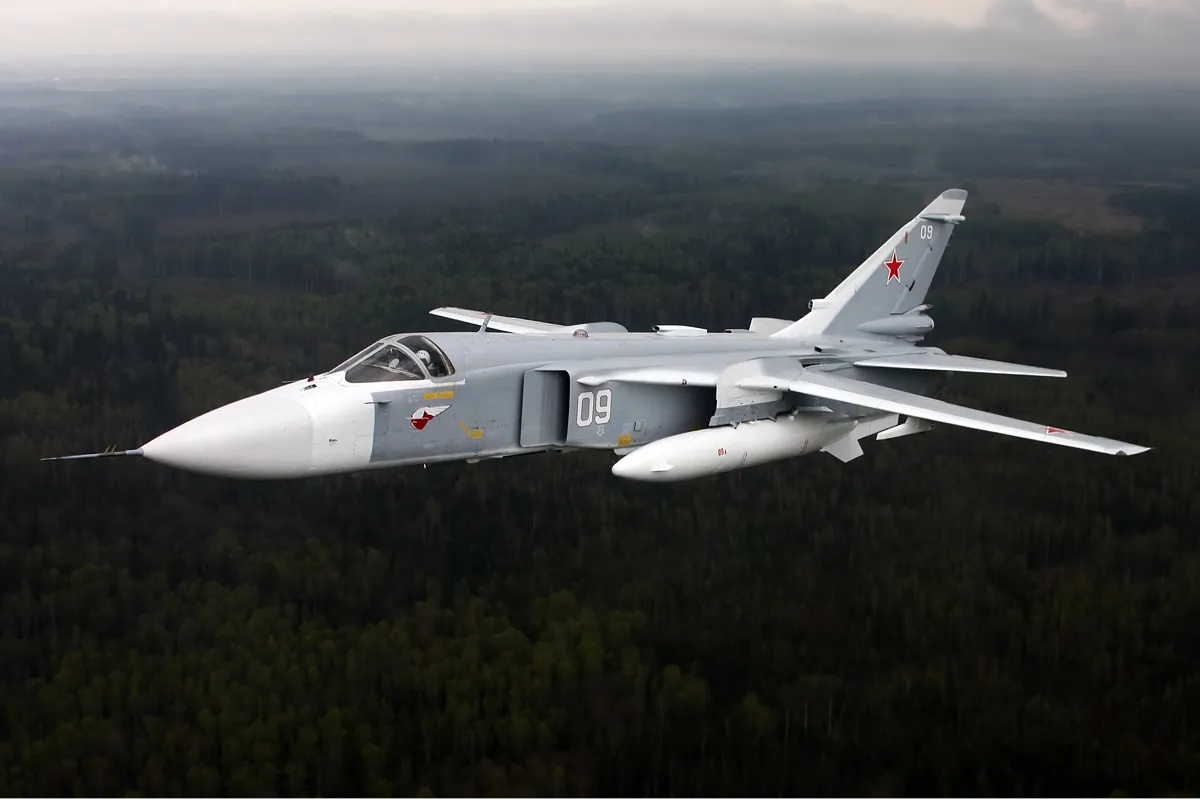
- Sukhoi Su-24: the Soviet variable-geometry strike bomber the Su-34 was built to replace in Russian service.
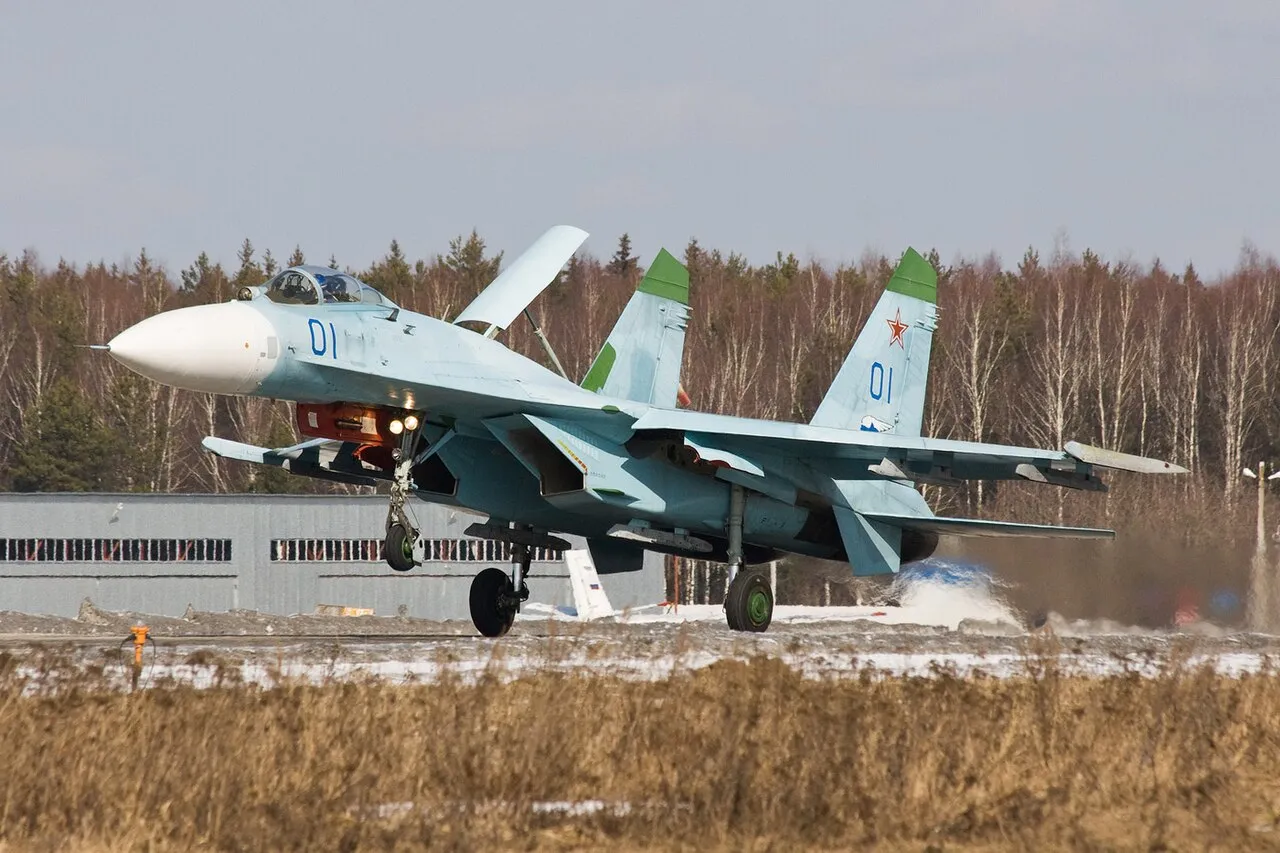
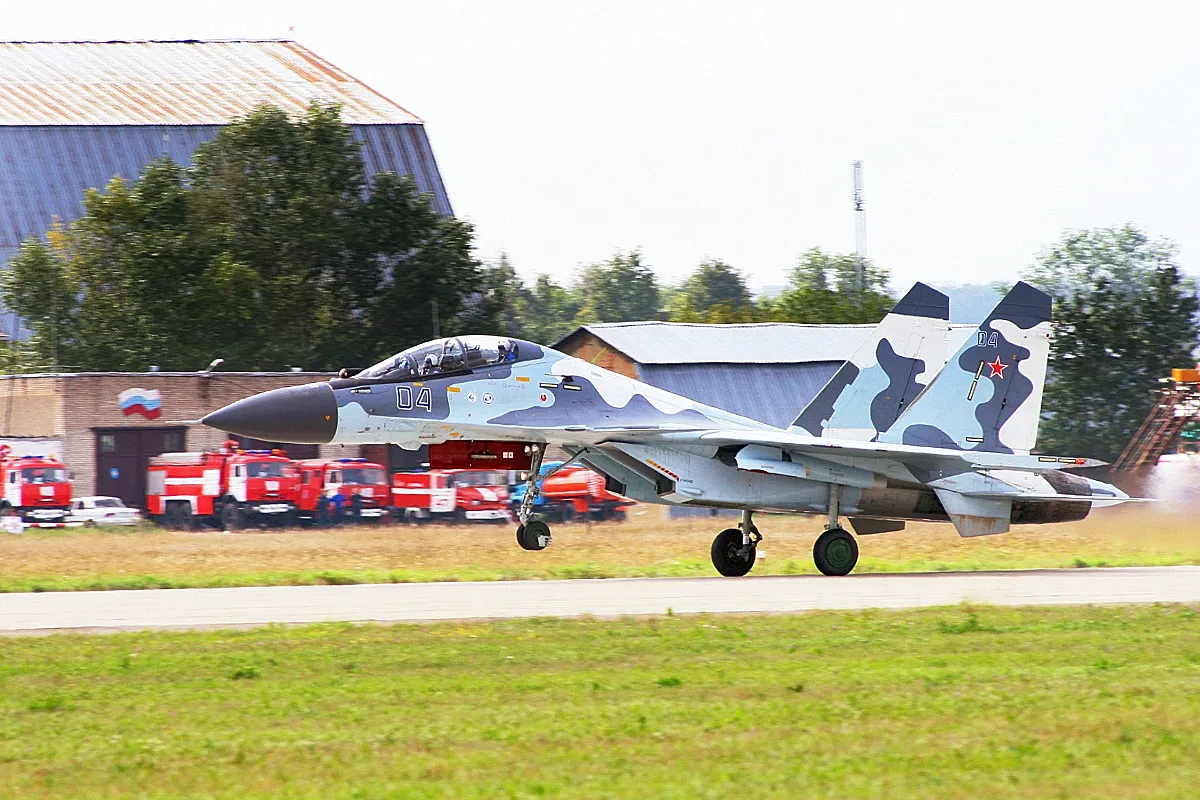
- Sukhoi Su-30: another two-seat Su-27 derivative, built for air superiority and multirole strike rather than dedicated tactical bombing.
- McDonnell Douglas F-15E Strike Eagle: a Western two-seat strike fighter built on an air-superiority airframe for a similar precision-strike role, though its crew sit in tandem rather than side by side.