Contents
The Sukhoi Su-25, NATO reporting name “Frogfoot”, is a single-seat, twin-engine jet built for close air support, flying low and slow enough to work directly with ground troops. Sukhoi designed it around heavy armour rather than speed, and the type remains in service more than four decades after it first flew, having fought in nearly every major conflict involving a former Soviet-aligned air force since the 1980s1.
Design and development
The Soviet Ministry of Defence opened a requirement for a dedicated armoured attack aircraft in early 1968, after concluding that existing fighter-bombers such as the Su-7 and MiG-21 were too fast and too lightly protected for effective close support work. A formal design competition followed in March 1969 among the Sukhoi, Yakovlev, Ilyushin and Mikoyan bureaus, which Sukhoi’s “T-8” design eventually won over the rival Ilyushin Il-102. The first prototype, assembled by 9 May 1974, made its first flight on 22 February 1975 with test pilot Vladimir Ilyushin at the controls. Series production began in 1978 at Factory No. 31 in Tbilisi, and the type was officially introduced on 19 July 19811.
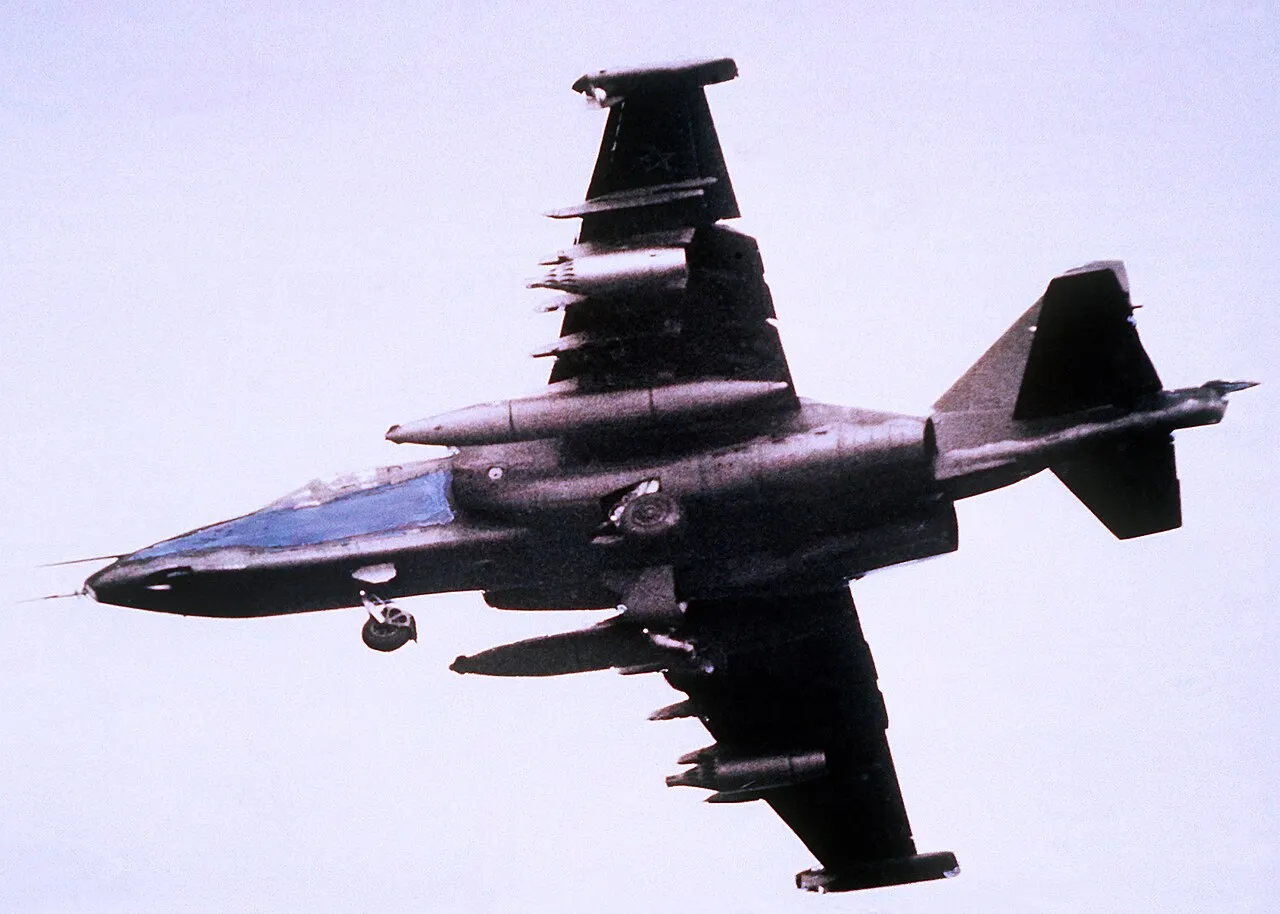
The airframe favours protection over speed: the cockpit sits inside a welded titanium “bathtub” with a steel headrest, and the airframe itself is built mostly of aluminium, with steel, titanium and magnesium alloy components added for armour and strength. The pilot sits low for protection, which hurts rearward visibility; a periscope compensates for the blind spot. Over 1,000 aircraft have been built across all variants; production in Georgia ran from 1978 to 2010, with 582 single-seat Su-25s built between 1978 and 19891 alongside export models.
Specifications
The Su-25 is 15.53 metres long, including its nose probe, with a wingspan of 14.36 metres. Maximum take-off weight is 19,300 kg, and the aircraft is flown by a single pilot. Power comes from two Soyuz/Tumansky R-195 turbojets producing 44.18 kN of thrust each, non-afterburning engines chosen for reliability and resistance to battle damage rather than outright speed; top speed is 975 km/h at sea level. Ferry range at altitude is about 1,000 km, falling to a combat radius of roughly 750 km with a full 4,400 kg ordnance load at low altitude1.
Weapons are carried on 11 hardpoints, fed by a built-in 30 mm twin-barrel cannon with 250 rounds. The type can carry unguided rockets, laser- and TV-guided missiles and bombs, and short-range air-to-air missiles for self-defence, drawing on a Soviet and Russian weapons inventory built up through the type’s service life1.
Variants
The baseline Su-25K was an export version with minor equipment changes, of which 180 were built between 1984 and 1989. The Su-25UB is a twin-seat trainer that first flew on 12 August 1985, later followed by the carrier-capable Su-25UTG, fitted with an arrester hook and built in small numbers for operations from the carrier Admiral Kuznetsov1.
The Su-25T was a dedicated anti-tank version with an enlarged nose housing the Shkval optical sighting system and the Vikhr laser-guided missile as its main weapon, though only a handful were built before the programme was cancelled in 2000; the related Su-25TM, also known as the Su-39, added radar for air and ship targets. Russia’s main modernisation effort became the Su-25SM, which re-equipped more than 80 aircraft between 2005 and 2015 with a new navigation and attack suite, a wide-angle head-up display and satellite navigation. The newest standard, the Su-25SM3, introduced in 2018, adds a new electro-optical sensor turret and the Vitebsk-25 self-protection suite of missile-warning sensors and jammers, with 25 delivered by June 20191. Ukraine, Georgia and Azerbaijan have each run their own, smaller upgrade programmes for their Su-25 fleets.
Operators and service
The Russian Aerospace Forces operate the largest Su-25 fleet, with Ukraine, North Korea and Peru among the other significant users; the type has also served or still serves with dozens of other air forces1, including Georgia, Iraq, Iran, Belarus and several African states.
Its combat debut came in the Soviet-Afghan War, where the first squadron deployed to Shindand airbase on 19 July 1981 and Su-25s went on to fly about 60,000 sorties over the course of the war. Iraq flew the type heavily in the final phase of the Iran–Iraq War, with around 900 combat sorties, and Russia used it again in both Chechen wars, in the 2008 war with Georgia, and from 2015 in its intervention in Syria, where its aircraft flew more than 1,600 sorties by March 2016. Both Russia and Ukraine have flown the Su-25 extensively since Russia’s full-scale invasion of Ukraine began in February 2022, and Iraq used ex-Russian and ex-Iranian examples against Islamic State, flying 3,562 Su-25 missions between June 2014 and December 20171.
Safety record
The Su-25’s low-level, high-threat mission has made it one of the most frequently shot-down jets of its era. Up to 32 Su-25s were lost during the Soviet-Afghan War, including aircraft destroyed on the ground, and further losses followed to man-portable air-defence missiles and ground fire in nearly every conflict the type has flown in since, from the Chechen wars to the war in Donbas from 2014 and the full-scale war in Ukraine from 2022, where dozens of Russian and Ukrainian Su-25s have been confirmed destroyed. Away from combat, the type was grounded fleet-wide by Russia in March 2008 after a Su-25 exploded in mid-air during a live-firing exercise when a missile fired accidentally from another aircraft struck it1.
Similar aircraft
- Fairchild Republic A-10 Thunderbolt II: the American equivalent, a dedicated, heavily armoured close air support jet designed to the same Cold War-era concept.
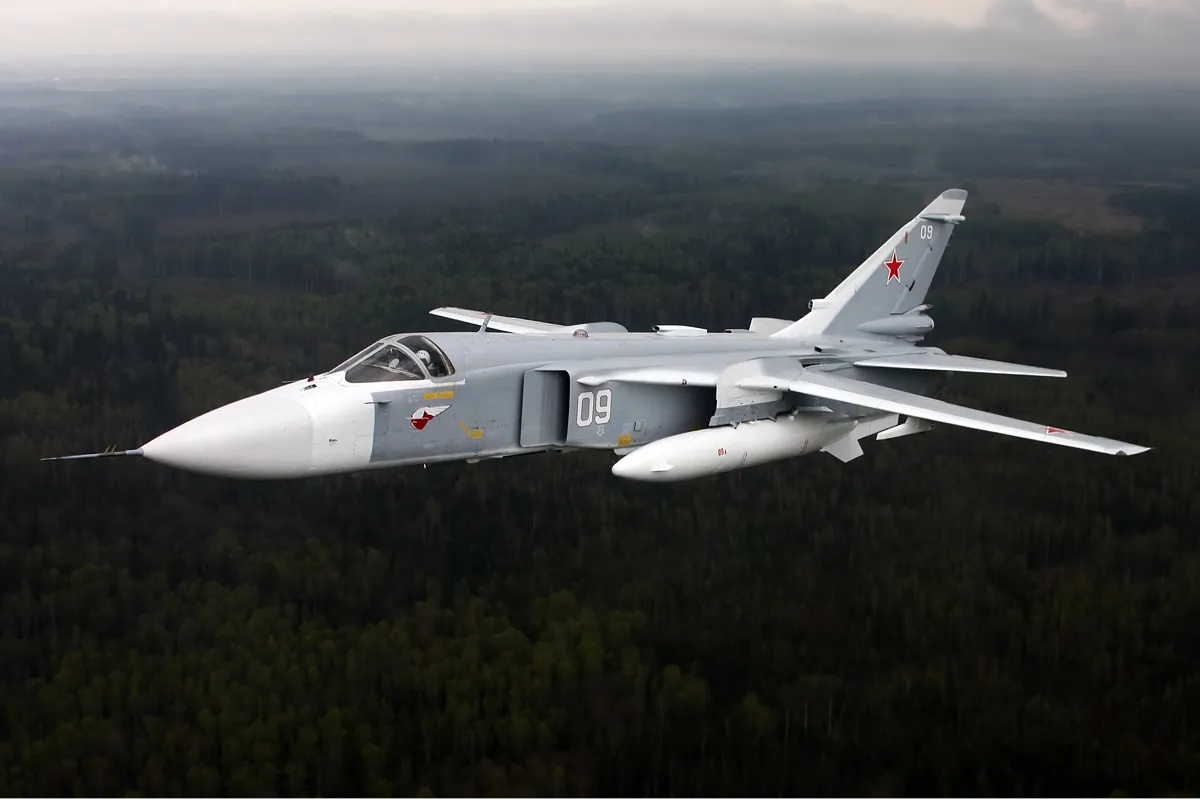
- Sukhoi Su-24: the Soviet swing-wing strike aircraft that served alongside the Su-25 in Soviet and Russian service, built for longer-range strike rather than front-line close support.
- Mil Mi-24: the Soviet attack helicopter that flew the same close air support missions as the Su-25 over Afghanistan and later conflicts.