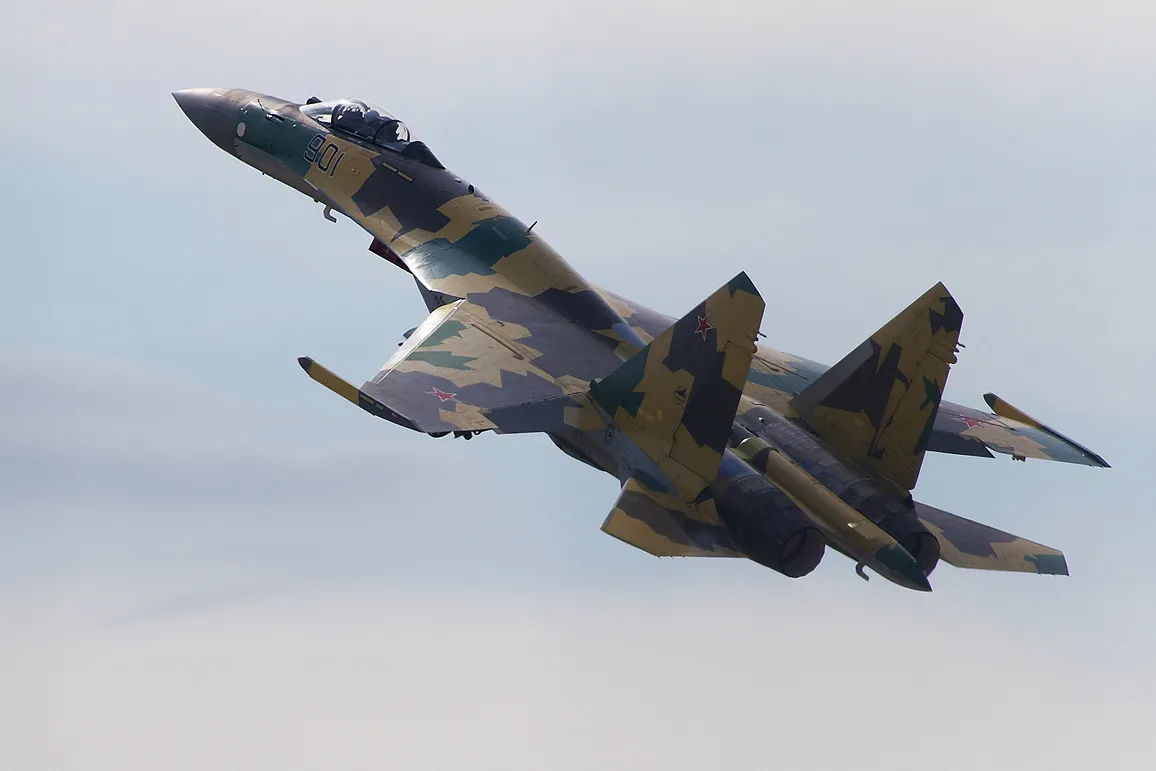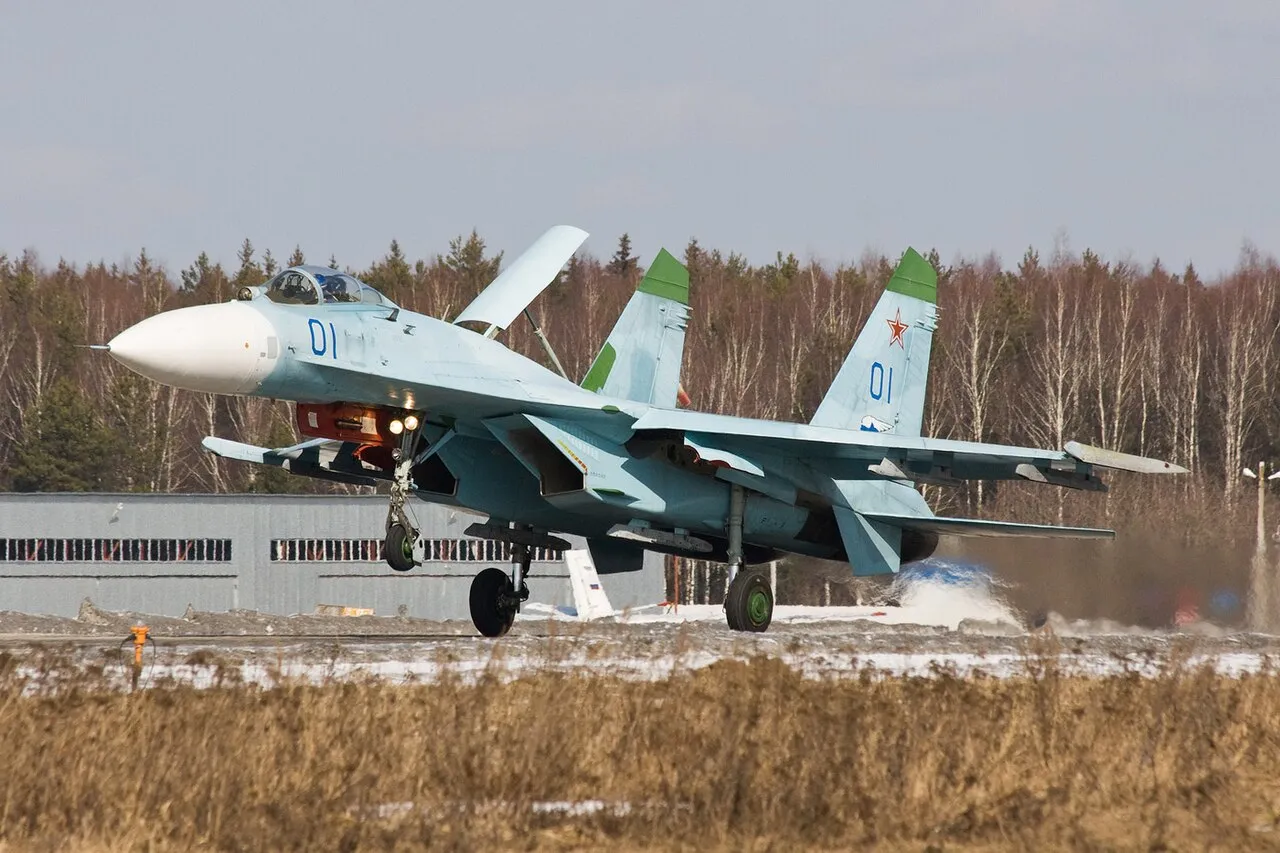
The Sukhoi Su-27 is a twin-engine air-superiority fighter designed for the Soviet Air Forces to counter large American fourth-generation fighters such as the Grumman F-14 Tomcat and McDonnell Douglas F-15 Eagle. Sukhoi built it for long-range air defence and escort work, with enough fuel and manoeuvrability to engage enemy fighters far from base. More than 680 were built between 1982 and 2010, and the type remains in frontline service1 with Russia and several former Soviet and client air forces.
Design and development
The Su-27 grew out of a 1969 Soviet requirement for a large, long-range fighter to match the American F-15, the same requirement that produced the smaller, shorter-range MiG-29. The first prototype, the T-10, flew on 20 May 1977, but early flight testing showed the aerodynamics needed a substantial redesign. Sukhoi reworked the airframe extensively before the type entered service on 22 June 19851.
The result was an aircraft built around a large, integrated wing-body design that blends the fuselage and wing to generate lift and carry fuel1, giving it the long range and large missile load the requirement called for. A two-seat trainer version, the Su-27UB, followed to let air forces convert pilots onto the type.
Specifications
Specifications put the production Su-27SK at 21.9 metres long with a wingspan of 14.7 metres. Its maximum take-off weight is 33,000 kg, and it is powered by two Saturn AL-31F afterburning turbofans. Wikipedia gives its maximum speed as 1,400 km/h (Mach 1.13) at sea level and 2,500 km/h (Mach 2.35) at altitude; official figures do not state a separate cruise speed. Combat range is 3,530 km at cruising altitude when carrying two R-27R1 and two R-73E missiles launched at half distance, falling to 1,340 km at sea level. The single-seat Su-27 carries one pilot, while the Su-27UB trainer seats two1.
Variants
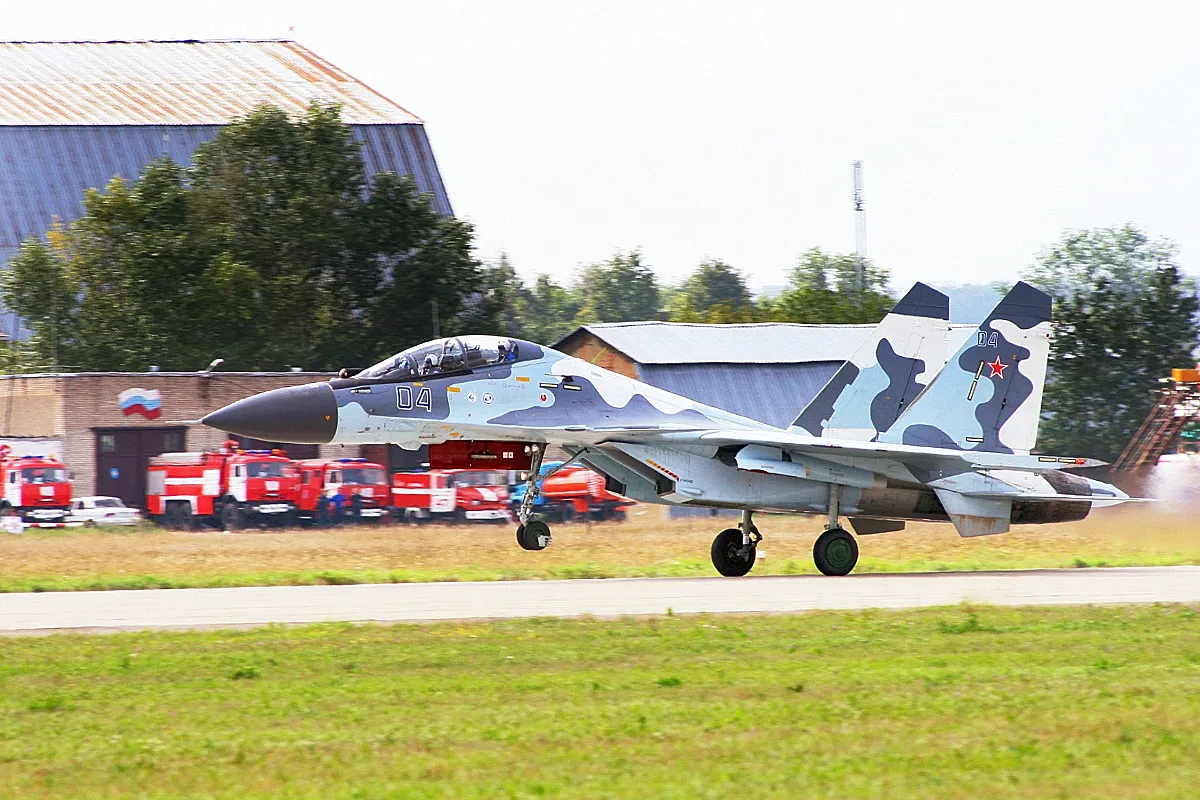
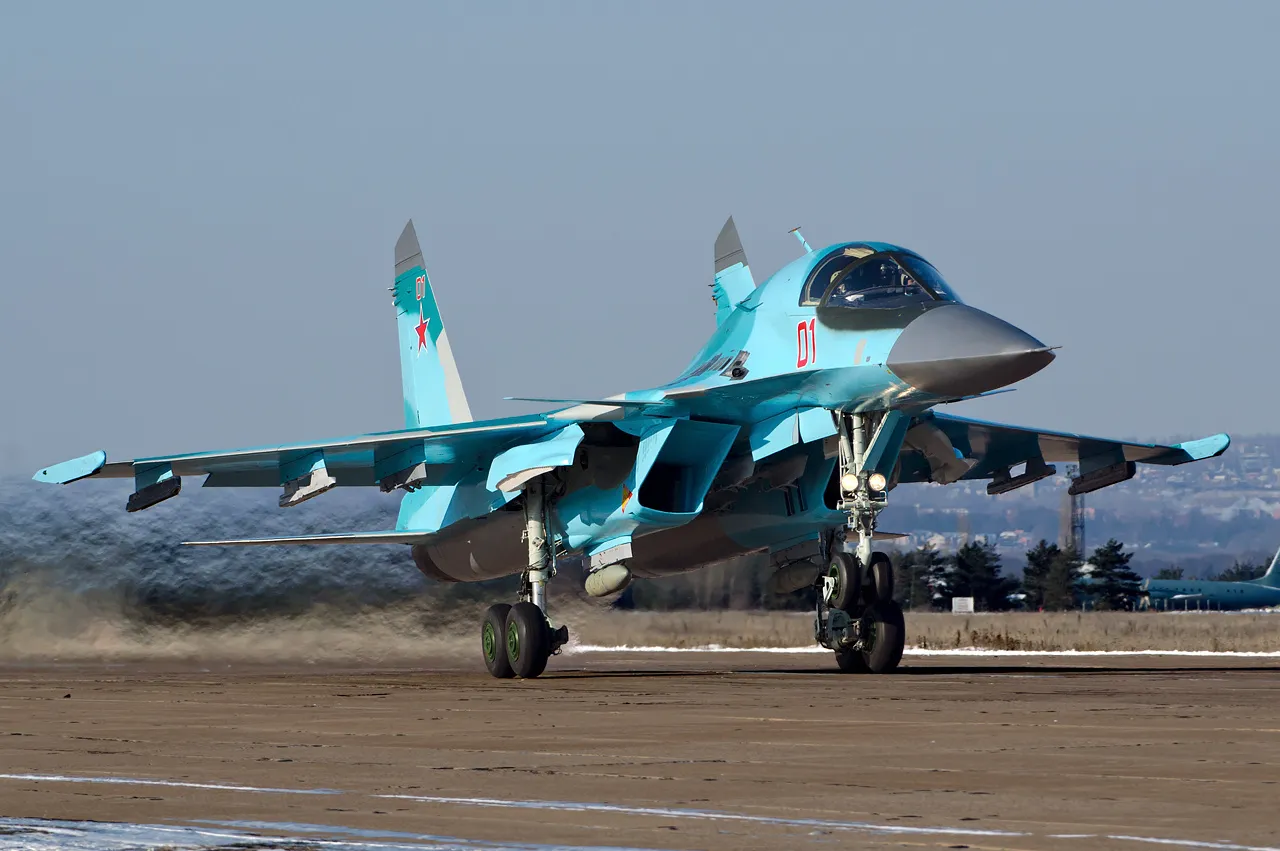
Besides the baseline Su-27 and the Su-27UB two-seat trainer, the type became the basis for a wide family of derivatives, including the ship-borne Su-33, the two-seat multirole Su-30, the swing-wing Su-34 strike aircraft, and the heavily upgraded, twin-tail Su-35. China also built its own licensed and later reverse-engineered versions, the Shenyang J-11 family1.
Operators and service
The type entered service with the Soviet Air Forces in 1985 and, after the Soviet collapse, was inherited by Russia, Ukraine, Belarus and other former Soviet states. It was also exported to China, and later to Vietnam, Ethiopia, Eritrea, Angola, Kazakhstan, Uzbekistan and Indonesia. Russia and Ukraine have both flown the type in combat, including in the war following Russia’s 2022 invasion of Ukraine. The aircraft remains in service with Russia and several other operators1, even as newer derivatives such as the Su-35 take over front-line roles.
Similar aircraft
- Mikoyan MiG-29: the lighter, shorter-range fighter developed alongside the Su-27 from the same 1969 Soviet requirement.
- F-15 Eagle: the American long-range air-superiority fighter the Su-27 was built to match.
- F-14 Tomcat: the other large American fourth-generation fighter the Su-27 was designed to counter.