Contents
The Sukhoi Su-30 is a twin-engine, two-seat supermaneuverable fighter developed from the Su-27 family. Sukhoi designed it, and Irkut Corporation and KnAAPO build it, with Hindustan Aeronautics Limited producing a licensed version in India. The type first flew on 31 December 19892 and remains in service1 today as a long-range interceptor, air-superiority fighter and strike aircraft flown by more than a dozen air forces.
Design and development
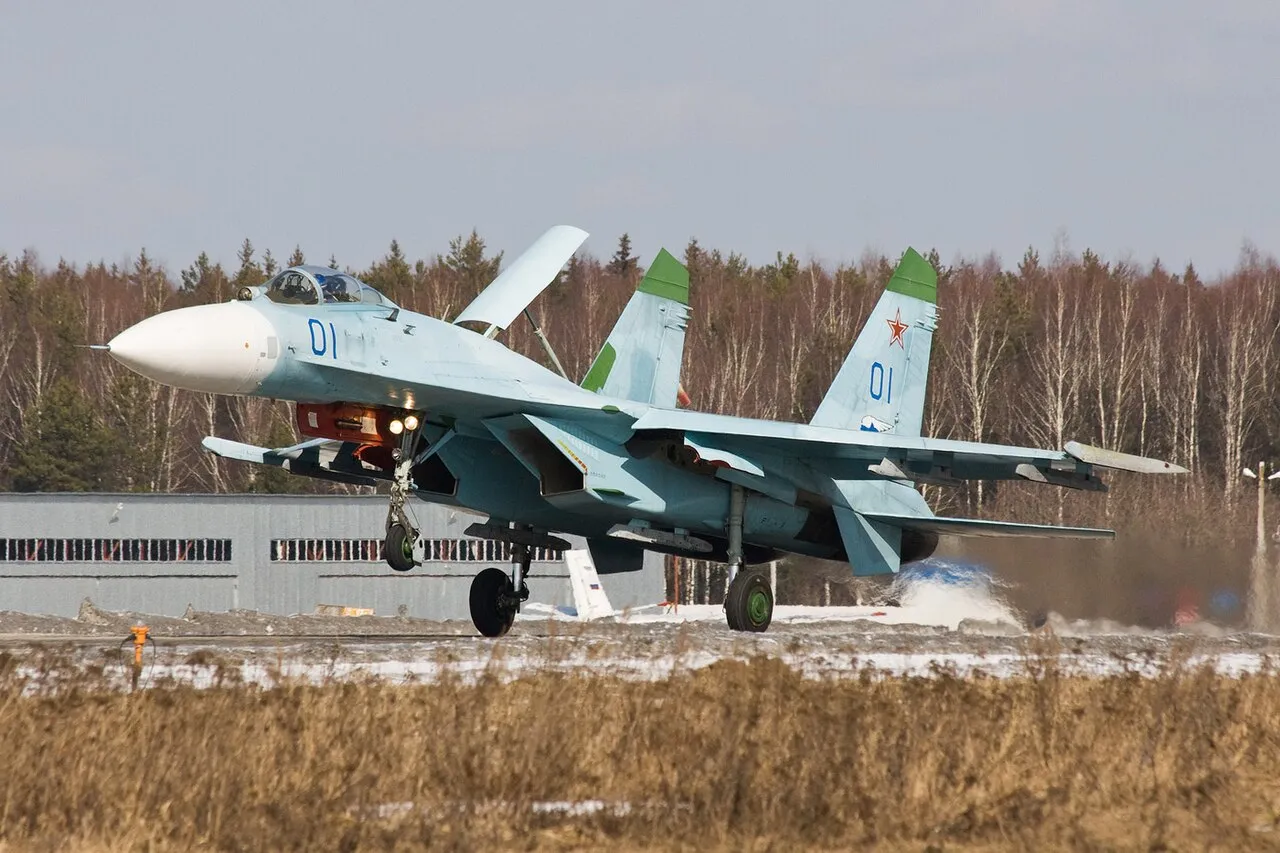
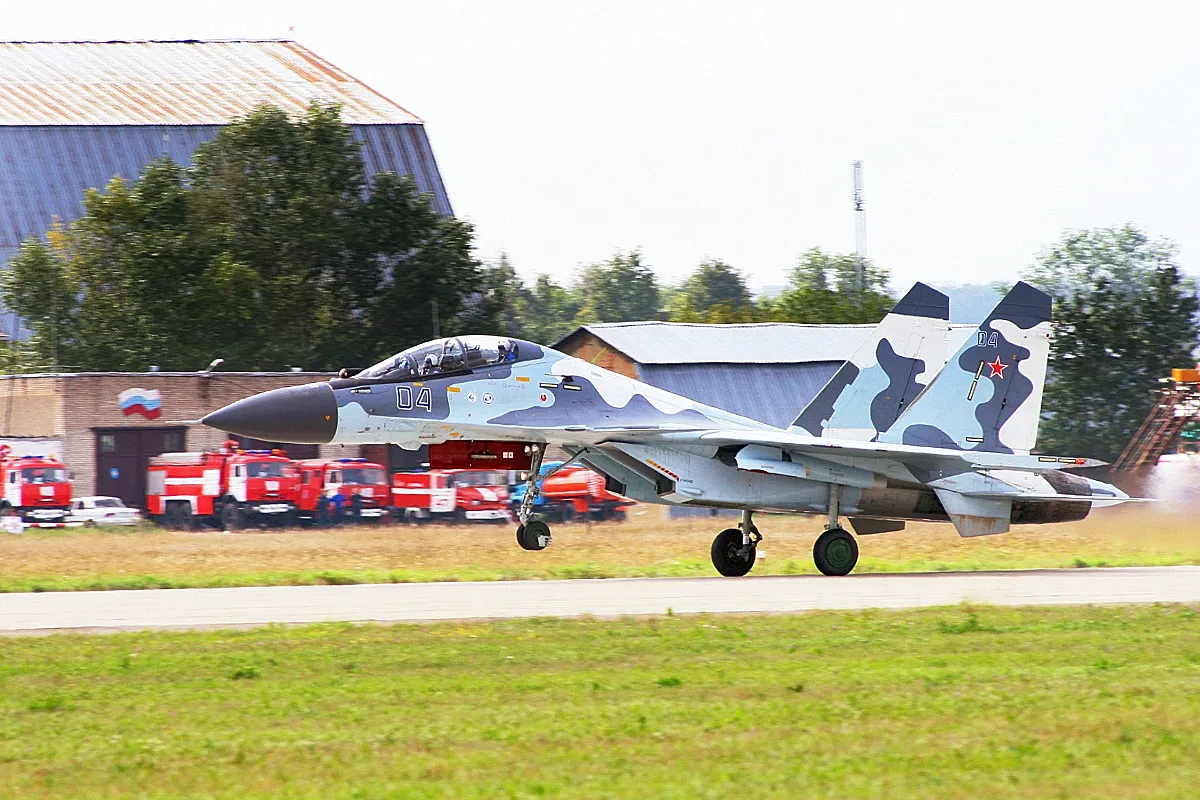
The Su-30 began in 1986 as the Su-27PU, intended as a long-range interceptor or airborne command post for Soviet Air Defense Forces that needed to cover vast stretches of Soviet airspace. Sukhoi built it on the airframe of the two-seat Su-27UB trainer, adding in-flight refuelling and upgraded navigation so the second crew member could manage long patrols and coordinate other fighters. A proof-of-concept demonstrator flew on 6 June 1987, and the first Su-27PU prototype flew on 31 December 1989 at Irkutsk, followed by the first pre-production aircraft on 14 April 1992. The Russian defence ministry renamed the Su-27PU to Su-30 in 19961.
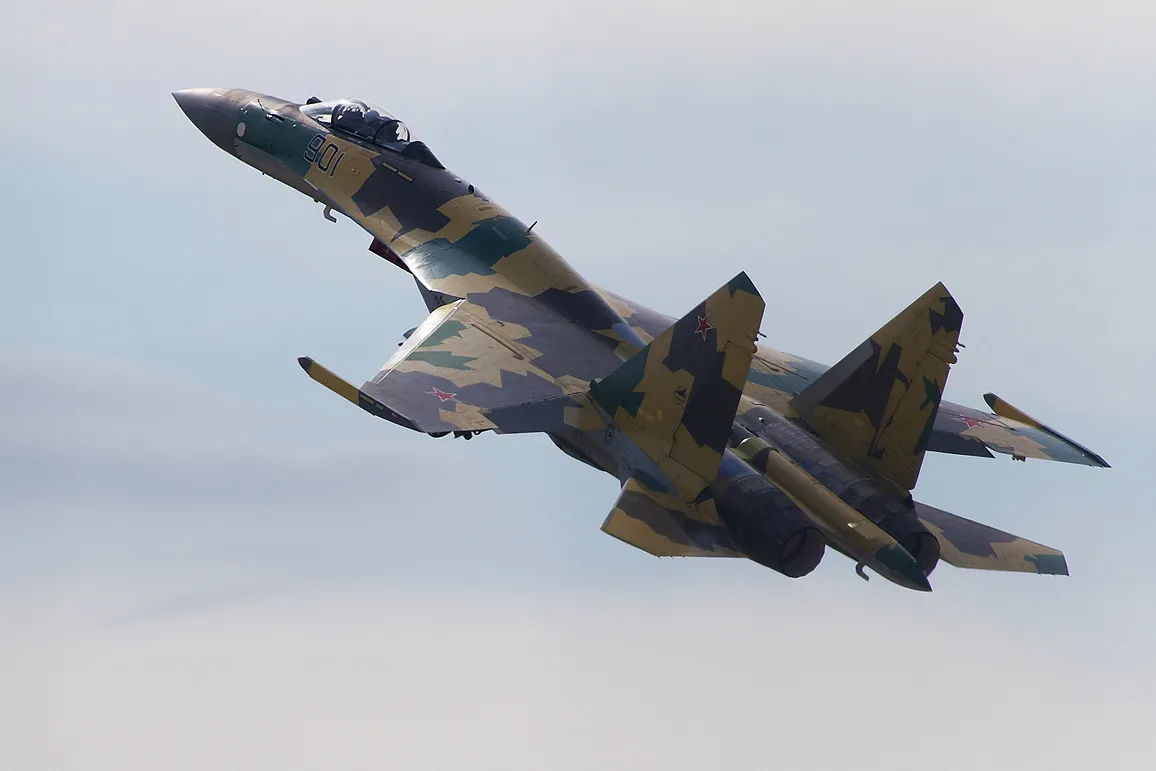
Like other members of the Flanker family, the Su-30 uses an integrated aerodynamic design that blends fuselage and wing1, and later variants add thrust vectoring and canards that let the aircraft perform advanced manoeuvres such as Pugachev’s Cobra. Combined with the long range inherited from the Su-27, those additions let Sukhoi market what began as an interceptor programme to air forces well beyond Russia as a multirole fighter.
Specifications
The production aircraft is 21.9 metres long with a wingspan of 14.7 metres, close to the dimensions of the Su-27 it is based on. Maximum take-off weight is 34,500 kg, and it is powered by two Saturn AL-31F afterburning turbofans. Range is about 3,000 km at high altitude without refuelling, rising to as much as 5,200 km with one aerial refuelling2, a figure that reflects the type’s original role as a long-endurance interceptor. The aircraft carries a crew of two, a pilot and a weapons systems officer, who share the workload of flying the aircraft and operating its radar and weapons over long missions. Over 630 Su-30s had been built by 20191, produced across several competing variants rather than one standard model.
Variants
The baseline Su-30MK was an upgraded tactical strike version shown at the 1993 International Defence Exhibition, the template for the export models that followed. The Su-30MKI, built for India, was the first version to combine thrust vectoring with canards, and carries avionics sourced from Russia, India, France and Israel; India signed contracts for 8 Su-30Ks and 32 Su-30MKIs on 30 November 1996, and a further licence agreement worth more than US$3 billion for 140 aircraft followed on 28 December 2000, with Hindustan Aeronautics Limited production starting in 2004. China’s Su-30MKK came from an agreement worth $1.8 billion signed in 1996 for 38 aircraft; the first prototype flew in March 1999, and the Chinese air force received its first ten in December 2000. Russia’s own Su-30SM, built by Irkut, was announced in 2011, made its maiden flight on 21 September 2012, and carries an N011M Bars radar with a maximum detection range of 400 km1; the further-upgraded Su-30SM2 adds an Irbis-E radar and more powerful AL-41F1S engines.
Operators and service
As of 2024, India flies 261 Su-30MKIs, the largest fleet of any operator, while Russia operates roughly 80 Su-30SMs alongside smaller numbers of Su-30M2s and Su-30SM2s, and China flies 73 Su-30MKKs and 24 Su-30MK2s. Export customers include Algeria with 59 Su-30MKAs, Kazakhstan with 29 Su-30SMs, Malaysia with 18 Su-30MKMs and Vietnam with 35 Su-30MK2Vs, plus smaller fleets in Belarus, Armenia, Indonesia, Myanmar, Uganda, Angola, Mongolia and Ethiopia1.
The type has seen combat in several conflicts. Russia deployed Su-30SMs to Latakia in Syria in September 2015, and by late December that year 16 Su-30SMs were flying from Khmeimim Air Base, providing target illumination for bombers. Russia has also lost several Su-30SMs over Ukraine since 2022, including one claimed shot down by a Ukrainian naval drone using an AIM-9X missile on 2 May 2025. India’s Su-30MKIs flew air-defence cover during Operation Sindoor in May 2025, and on 10 May struck 11 Pakistani air bases with BrahMos missiles. India is separately pursuing a “Super Sukhoi” upgrade of 80 to 84 Su-30MKIs, estimated at around US$7.9 billion, intended to keep the type in service until 20551.
Safety record
Sukhoi’s export demonstrator crashed at the 1999 Paris Air Show on 12 June, with both pilots ejecting safely. Russia has recorded accidents in service: a Su-30M2 was shot down by a Su-35S during a training exercise on 22 September 2020, and a Su-30SM crashed near Irkutsk on 23 October 2022, with investigators suspecting the oxygen system had been refilled with nitrogen1. Several more have been lost in combat over Ukraine and the Red Sea area since 2022.
Similar aircraft
- Sukhoi Su-27: the single-seat air-superiority fighter whose airframe and two-seat trainer version the Su-30 was built from.
- Eurofighter Typhoon: a European multirole fighter of a similar generation, built for many of the same export markets.
- Dassault Rafale: a French twin-engine multirole fighter that competes with the Su-30 for export orders, notably in India.