Contents
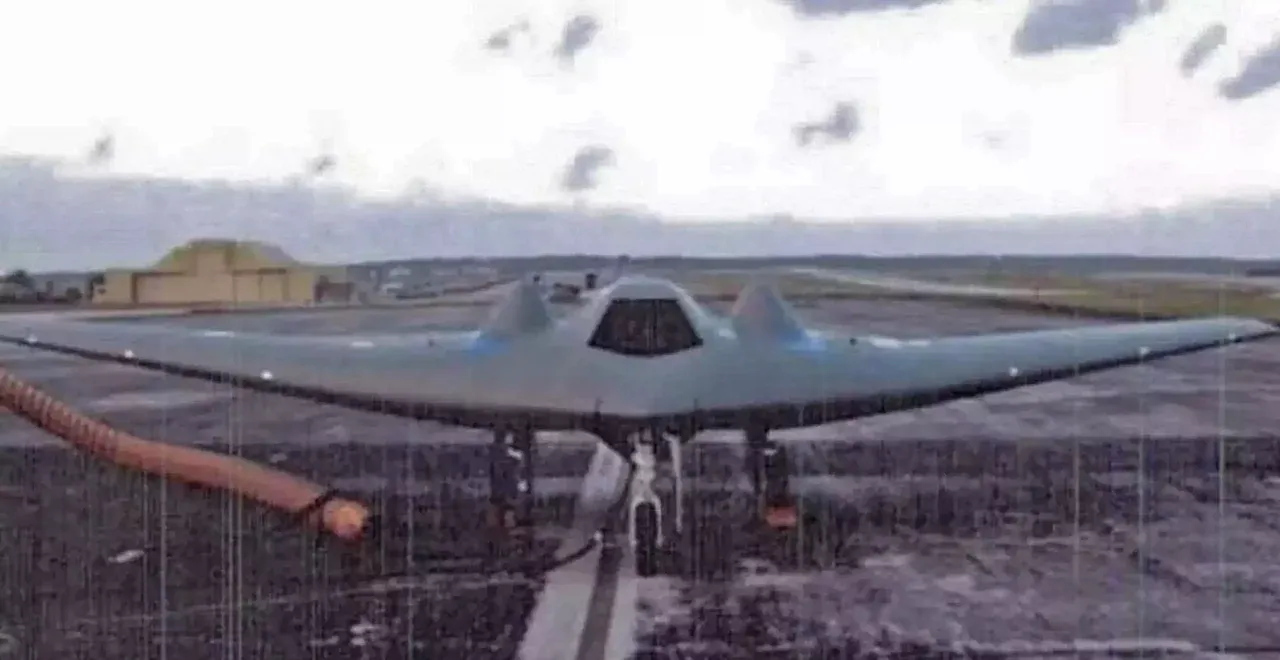
The Lockheed Martin RQ-170 Sentinel is a tailless flying-wing1 stealth drone built for the US Air Force by Lockheed Martin’s Skunk Works. The Air Force’s own one-page fact sheet calls it a low-observable aircraft that provides reconnaissance and surveillance to joint force commanders2, and says little more; most of what is known comes from a handful of photographs and a US Army recognition manual that gave the first official figures for its size.
Design and development
Lockheed Martin’s Advanced Development Programs office2 ran the programme, per the Air Force’s fact sheet, which was tasked with rapidly developing and fielding a low-observable aircraft for locating targets on behalf of combatant commanders. The type first became public only in December 2009, when photographs taken at Kandahar Airfield, Afghanistan, showed it had in fact been operating there since late 2007, flown by the 30th Reconnaissance Squadron1, activated two years earlier; an aviation analyst nicknamed it the “Beast of Kandahar” before the Air Force would confirm the programme existed. Lockheed Martin has never released a first-flight date; 2007 is simply the year it was first seen flying. The US Army’s Training Circular 3-01.80, a visual aircraft recognition manual published in 2017, became the first official document to describe the airframe, noting low-mounted, swept-back wings with square tips3 and a sharp, faceted nose with no tail fins, shaping aimed at avoiding radar detection.
Specifications
Published figures for the RQ-170 are thin, and on wingspan the sources disagree. The airframe is 4.5 metres long, a figure the Army manual also gives. For wingspan, one set of sources gives 11.58 metres, while the Army’s manual, the only official document to state a figure, gives more than 65 feet, over 19.8 metres3 — about ten feet more than the MQ-1 Predator’s span. No manufacturer figure exists to settle the gap, so both values stand here. Estimated endurance of 5 to 6 hours and service ceiling about 15,000 metres, neither an Air Force-confirmed number. The aircraft flies on a single turbofan of unconfirmed type, estimated 20 to 30 built1, reported as either a Garrett TFE731 or a General Electric TF34, neither figure an official Air Force total. No maximum take-off weight has ever been published for the type, so none appears here.
Sensors and weapons
The Army’s recognition manual gives the Sentinel’s role as close-range, day and night surveillance with no long-range sensor fit, a design meant to loiter inside contested airspace instead of watching from a safe distance. Defence analysts, not an official source, credit it with an electro-optical/infrared camera and a belly-mounted AESA radar1, though neither the Air Force nor Lockheed Martin has confirmed the sensor suite. The RQ designation marks it as unarmed, and the Army manual states explicitly that it carries no weapons3.
Operators and combat use
Operationally, the type is flown by Air Combat Command’s 432nd Wing at Creech Air Force Base, Nevada, and the 30th Reconnaissance Squadron at Tonopah Test Range2, Nevada, per the Air Force’s fact sheet. During the May 2011 raid on Osama bin Laden’s compound1 in Pakistan, at least one Sentinel fed live video to President Obama and his national security team, and monitored Pakistani military radio traffic for signs of a response.
On 4 December 2011, Iran’s military said it had downed an RQ-170 over Iranian airspace, which the United States acknowledged two days later as a CIA-operated drone lost in or near Iranian airspace, with Iranian officers saying their electronic warfare unit took over the drone’s controls; that claim of a cyber takeover has not been independently verified. Iran released video of the captured aircraft on 8 December, and in April 2012 the Revolutionary Guard’s aerospace commander, General Amir Ali Hajizadeh, said Iran reverse-engineered the drone to build a copy using recovered data — an Iranian claim, like the capture method itself, reported here as Iran’s own account, not as established fact. Iranian officials at the time gave their own dimensions for the aircraft, a wingspan of about 26 metres and a height of 1.84 metres1, neither of which matches the wingspan figures given above.
Variants
Iran has since displayed drones it presents as derived from the captured Sentinel. The Saegheh, unveiled in 2016, is described as similar in appearance to the RQ-170 and able to carry precision-guided bombs, unlike the unarmed original. During a February 2018 incident over Israeli and Syrian airspace, the Israeli Air Force shot down a Saegheh that Israeli media reported1 was largely based on the RQ-170’s design.
Similar drones
- Northrop Grumman RQ-4 Global Hawk: keeps a conventional tailed airframe built for missions lasting more than 24 hours4, instead of the Sentinel’s flying-wing stealth shaping.
- General Atomics MQ-9 Reaper: a drone of broadly similar size that carries various weapons and payload packages5, unlike the unarmed, stealth-shaped Sentinel.