Contents
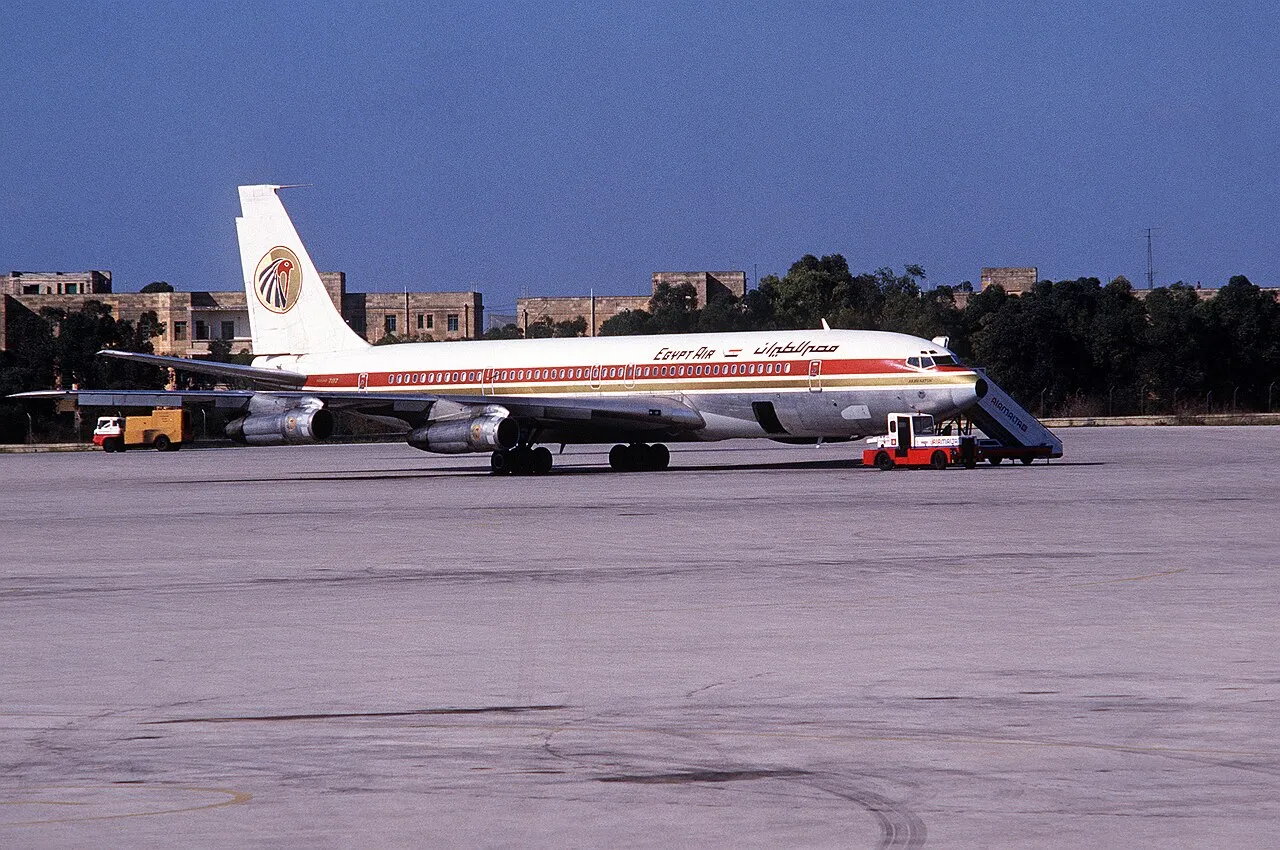
The Boeing 707 is the four-engine jet airliner that made Boeing a leader in commercial aviation and helped bring jet travel to the mass market. Boeing built it as a swept-wing, narrow-body jet for medium- and long-haul routes, and most airlines flew it as a passenger and cargo transport before later operators converted survivors into military tankers, transports and radar aircraft. It is retired from commercial airline service, with a small number still flying in military roles such as aerial refuelling, transport and airborne early warning1.
Design and development
Boeing developed the 707 from its Dash 80 prototype, first flown in 1954, at a time when Douglas and other manufacturers were also racing to build a jet airliner for the American market. The production 707-120 made its first flight on 20 December 1957, and Pan American World Airways put the type into commercial service on transatlantic routes in October 1958, beating Douglas’s rival DC-8 to market. The aircraft’s swept wing and podded engines, both pioneered on the Dash 80, became the standard layout for large jet airliners that followed1.
Specifications
The numbers below describe the 707-320C, the longest-fuselage, longest-range version of the family. It is 46.61 m long with a wingspan of 44.42 m, and its maximum take-off weight is 151,318 kg. In cargo configuration it has a range of about 5,400 km, and it cruises at about 731 km/h at 23,000 ft. Typical seating ranged from up to 189 passengers on the earlier 707-120 to up to 194 on the 707-320C in an all-passenger layout. It flew with a flight crew of three: two pilots and a flight engineer1.
Engines changed over the production run: early aircraft flew with Pratt & Whitney JT3C turbojets, while later variants such as the 707-320C switched to JT3D turbofans1, which cut fuel burn and noise compared with the turbojet-powered originals.
Variants
Boeing built the 707 in several lengths and weights, from the original 707-120 through the longer-range 707-320 and the combined passenger-freighter 707-320C, the version most sources treat as the definitive model. Boeing also sold a shorter, lighter derivative under a separate name, the 720, for airlines that needed less range from shorter runways; combined, Boeing delivered 1,010 aircraft: 856 Boeing 707s and 154 Boeing 720s between 1956 and 19781.
Operators and service
Launch customer Pan Am flew the 707 on its flagship transatlantic and round-the-world routes, and the type was soon adopted by major airlines across North America, Europe, Asia and the Middle East as the first practical long-range jet airliner most of them operated. Production ran for more than two decades before Boeing’s newer wide-body and twin-aisle types, led by the Boeing 747, took over long-haul service. The 707 is retired from scheduled commercial airline service; the aircraft that remain active fly in military roles, including aerial refuelling, transport and airborne early warning and control (AWACS) missions1.
Safety record
Wikipedia’s aviation-occurrence database records 261 occurrences involving the Boeing 707, of which 174 were hull losses, with 3,039 fatalities as of January 2019. The type’s long service life, high production numbers and the less mature state of jet-age safety standards when it entered service all contributed to that toll. The deadliest single accident was the Agadir air disaster on 3 August 1975, which killed 188 people1.
Similar aircraft
- Douglas DC-8: the 707’s direct rival, a four-engine jet airliner launched for the same first generation of long-haul jet travel.
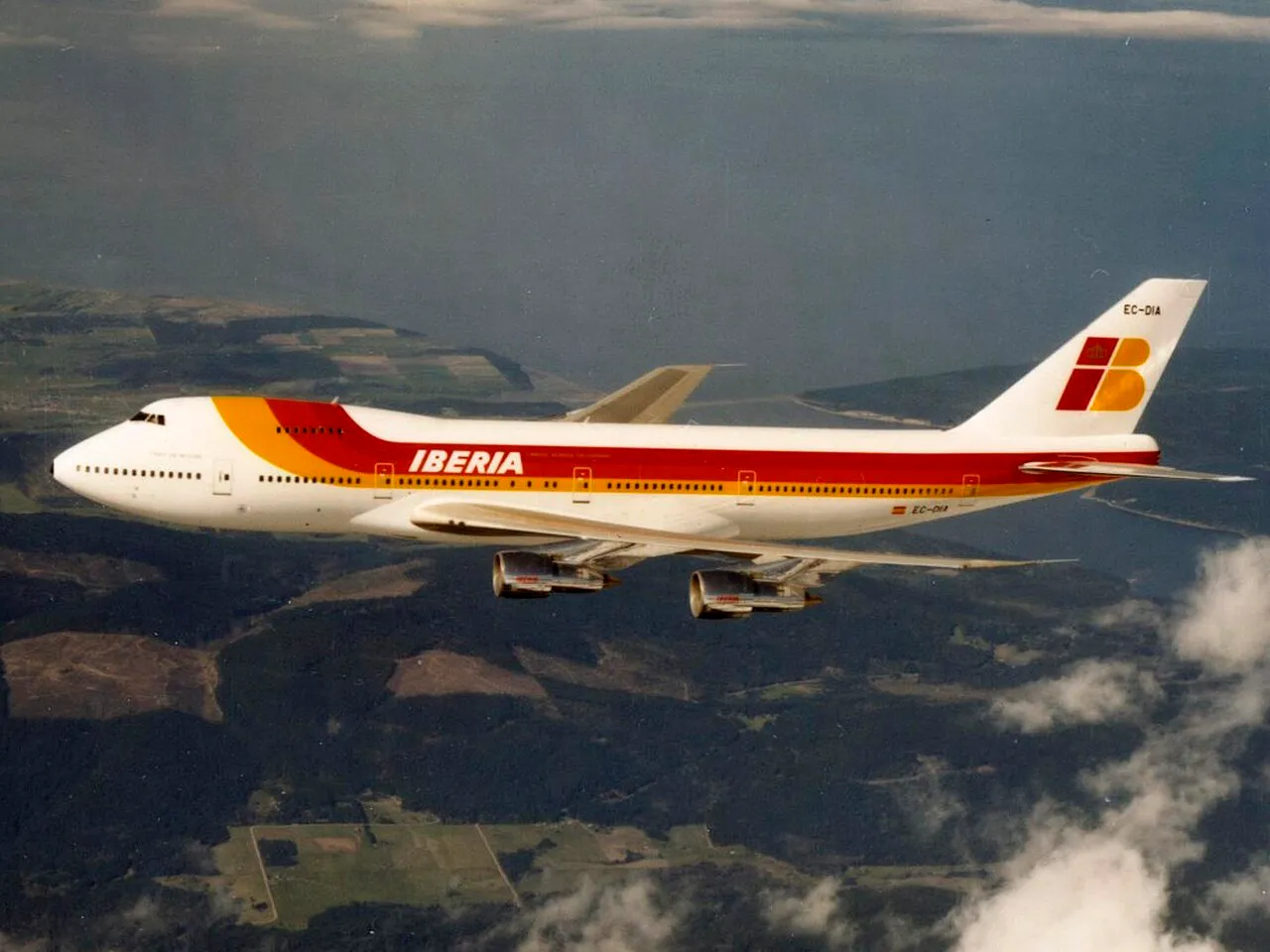
- Boeing 747: Boeing’s wide-body successor, built to replace the 707 and its contemporaries on the busiest long-haul routes.
_ZbySau.webp)
_ZnEDr2.webp)
_Z1wAcy8.webp)