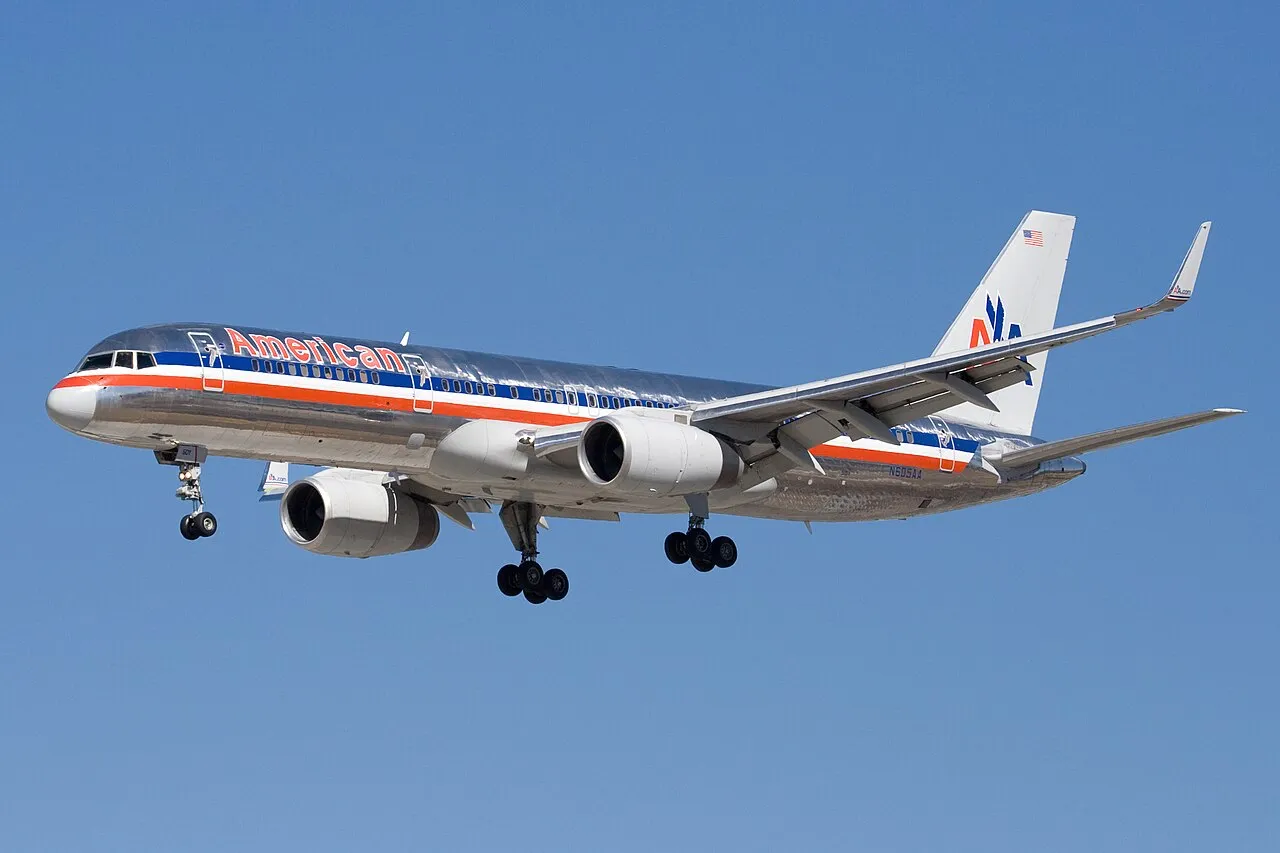
The Boeing 757 is a narrow-body airliner built by Boeing Commercial Airplanes, designed to fly longer, thinner routes than a typical single-aisle jet could manage. It first flew on 19 February 1982, and more than four decades later it still flies, mostly as a cargo aircraft for operators such as FedEx, UPS and DHL, with a smaller number still carrying passengers for airlines including Delta Air Lines and Icelandair1.
Design and development
Boeing developed the 757 alongside the wide-body 767, sharing cockpit design, systems and type rating so that crews could fly both aircraft. The 757 replaced the ageing 727 on domestic and transcontinental US routes, offering airlines a single-aisle jet with the range to cross the United States or the North Atlantic. It entered airline service a few months after its first flight, in 19831.
Its combination of a relatively small cabin with long range and strong engine performance also gave the 757 an unusual reputation among pilots and planespotters for its power-to-weight ratio and short-field performance1, letting it operate from runways too short for most wide-bodies while still crossing oceans.
Specifications
The standard 757-200 is 47.3 m long, with a wingspan of 37.95 m2 shared with the stretched 757-300. Maximum take-off weight is 116,000 kg for the 757-200, and typical range is about 7,250 km with a typical payload. In a two-class layout the 757-200 typically seats around 200 passengers. Cruise speed for both variants is about 858 km/h, Mach 0.8. Power comes from two Rolls-Royce RB211 or Pratt & Whitney PW2000 turbofans1.
Variants
Boeing built the type mainly as the 757-200, the best-selling version, with 913 delivered. The stretched 757-300 is 54.4 m long, with a maximum take-off weight of 123,600 kg, a shorter typical range of about 6,288 km, and seating for around 243 passengers in a two-class layout; Boeing delivered 55 of this variant. Boeing also built military and VIP variants of the 757. In total, 1,050 Boeing 757s were built between 1981 and 20051.
Operators and service
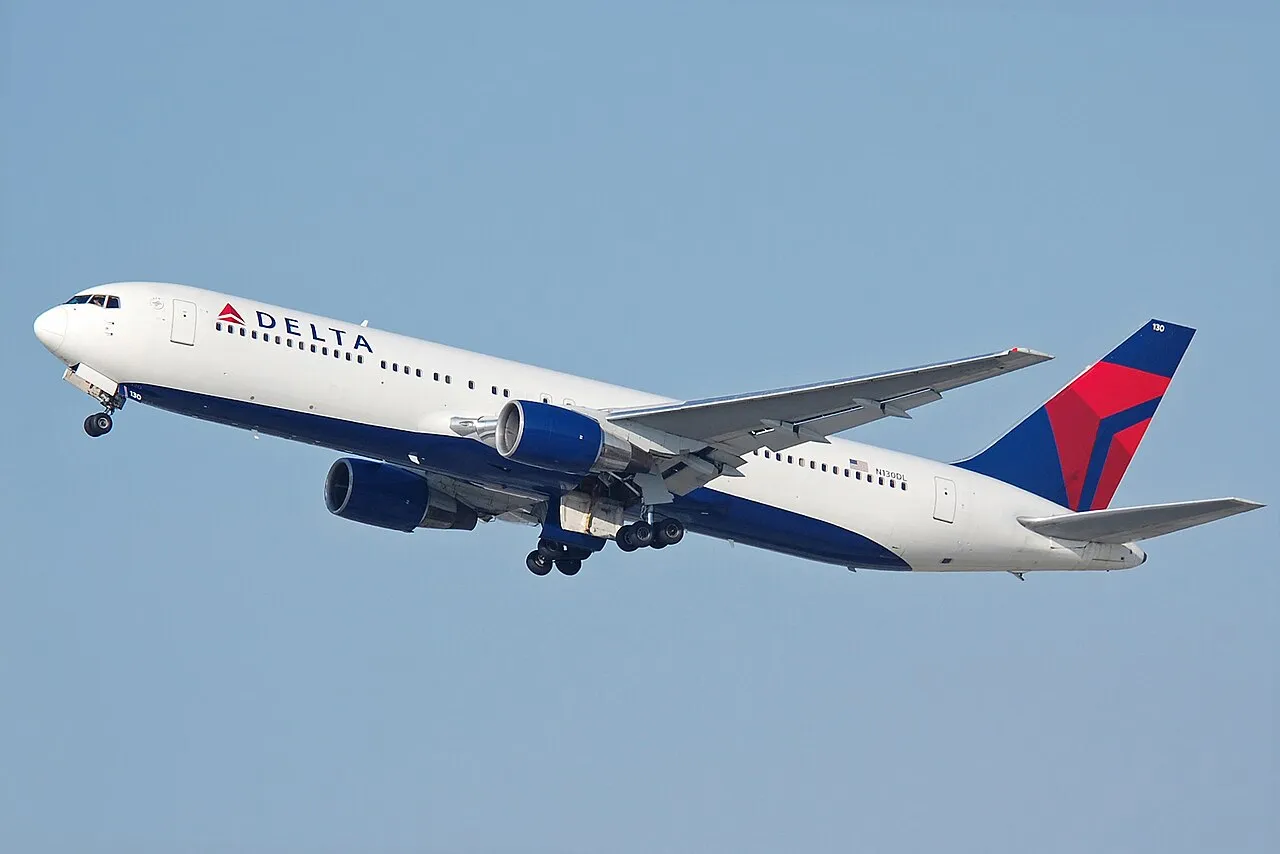
The 757 is retired from production but still in service, with most surviving aircraft now flying as freighters. Cargo operators FedEx, UPS and DHL make up much of the remaining fleet, having converted passenger aircraft to carry freight. A smaller number of passenger operators, including Delta Air Lines and Icelandair1, continue to fly the type on scheduled routes.
Similar aircraft
- Boeing 767: the wide-body developed alongside the 757, sharing its cockpit and systems.
- Boeing 737: Boeing’s smaller narrow-body family, aimed at shorter routes than the 757.
- Airbus A320 family: Airbus’s narrow-body competitor, though with a shorter typical range than the 757.
_ZbySau.webp)
_ZnEDr2.webp)
_Z1wAcy8.webp)