Contents
The Boeing 767 is a wide-body, twin-engine airliner that Boeing built to replace early narrow-body jets like the 707, bringing twin-aisle cabins to a smaller fuselage than the 747. Boeing launched the programme on 14 July 1978, when United Airlines ordered 30 of the 767-200, and the type entered service with United on 8 September 1982. It has flown with airline and cargo fleets around the world ever since, and a militarised version, the KC-46 Pegasus, serves as a US Air Force aerial tanker1; passenger-variant production has ended, but Boeing still builds the 767 as a freighter and as the KC-462.
Design and development
Boeing began studying a wide-body successor to the 707, code-named 7X7, in 1972, two years after the 747 had opened twin-aisle flying. By 1976 the design had settled on a twinjet layout similar to the Airbus A300’s, and in February 1978 Boeing gave the project the 767 designation. Early customers could choose between Pratt & Whitney JT9D and General Electric CF6 engines, the first time Boeing offered an engine choice at launch. The 767 was also the first Boeing wide-body designed with a two-crew digital glass cockpit, doing away with the flight engineer’s station; United Airlines initially insisted on a three-person cockpit until a 1981 US presidential task force ruled that two pilots could safely operate wide-body jets. Boeing developed the 767 almost as one programme with the narrow-body 757, sharing cockpit design, avionics and handling so pilots could fly both after a short conversion course1.
The prototype, registered N767BA, rolled out on 4 August 1981 and made its first flight on 26 September 1981. The JT9D-powered 767-200 received FAA and UK CAA certification in July 1982, with first delivery to United Airlines on 19 August 1982; the CF6-powered version followed with certification in September 1982, with first delivery to Delta Air Lines that October1.
Specifications
The best-selling model, the 767-300ER, is 54.9 metres long with a 47.57-metre wingspan, and its maximum take-off weight is about 187,000 kg. It can fly up to around 11,070 km, cruising at Mach 0.8, roughly 858 km/h, and seats about 218 passengers in a typical two-class layout. Two General Electric CF6, Pratt & Whitney JT9D/PW4000 or Rolls-Royce RB211 turbofans power the type. Boeing listed a 767-300ER at US$217.9 million in 20191. Figures vary across the family: the shortest 767-200 is about 48.5 metres long with roughly 142,900 kg maximum take-off weight, while the stretched 767-400ER grows to about 61.4 metres and 204,120 kg3.
Variants
The original 767-200 entered service with United Airlines in September 1982, followed by the longer-range 767-200ER in 1984. Boeing announced the stretched 767-300 in 1983, and it entered service with Japan Airlines on 20 October 1986; the extended-range 767-300ER followed American Airlines into service on 3 March 1988. Together the -300 and -300ER came to account for about two-thirds of all 767s sold. A second stretch, the 767-400ER, entered service with Continental Airlines on 14 September 2000, offering about 12 percent more capacity than the -3001.
Boeing also built dedicated freighters and military derivatives. The 767-300F freighter entered service with UPS on 16 October 1995. Japan’s E-767 airborne early warning aircraft, based on the 767-200ER, was delivered to the Japan Self-Defense Forces from 1998. The current military version, the KC-46 Pegasus aerial tanker, was selected by the US Air Force in February 20111 and is built on the same production line as the 767 Freighter.
Operators and service
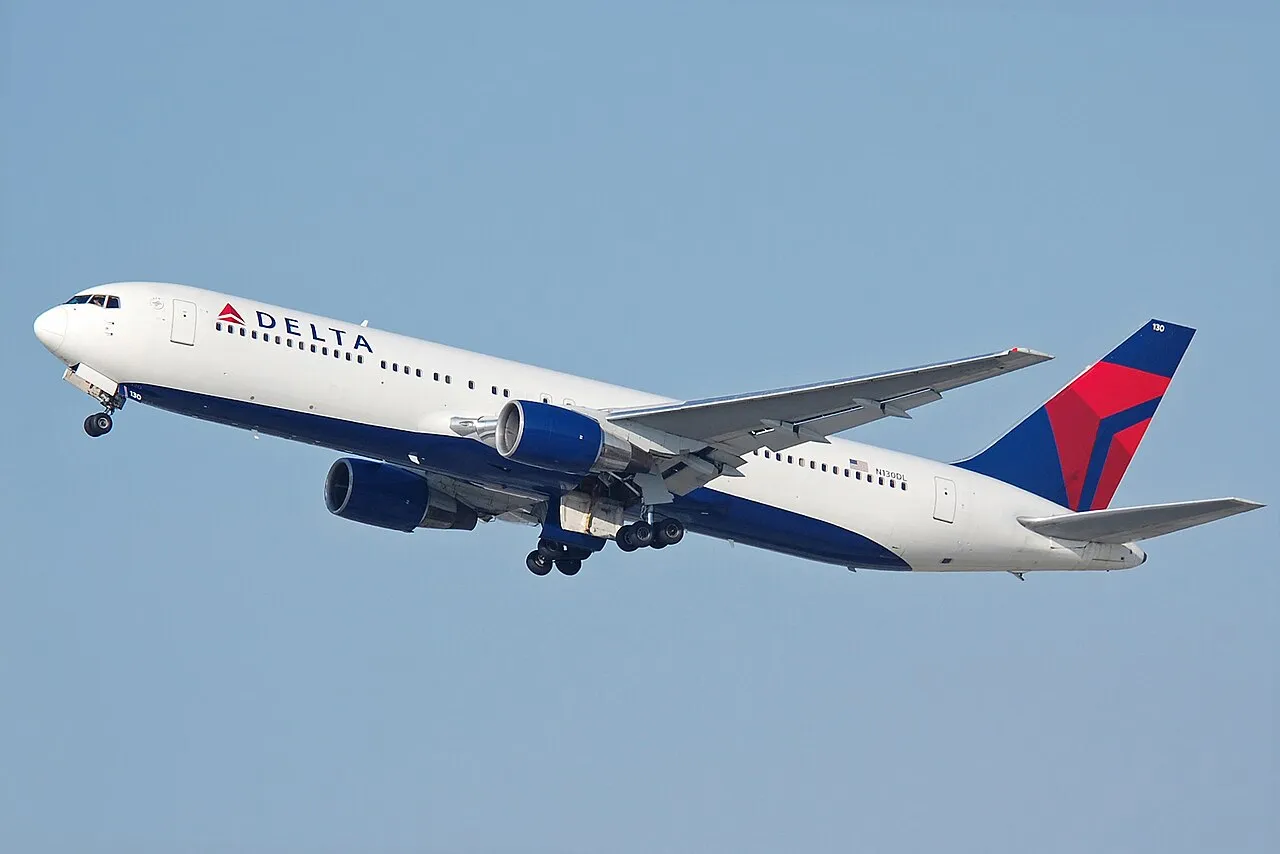
Early 767s flew mainly US domestic and transcontinental routes before moving onto transatlantic service, helped by FAA approval for 120-minute extended twin-engine operations granted to the 767 in May 1985. By the late 1980s the type had become the most common airliner on North Atlantic routes, crossing the ocean more often than all other aircraft types combined, and it helped popularise point-to-point flights that bypassed major hubs. Delta Air Lines operated the largest passenger fleet, 77 aircraft as of July 2018, while FedEx Express and UPS Airlines are the largest operators of the freighter version. By August 2026, Boeing had delivered 1,373 767s since the 1,000th aircraft went to All Nippon Airways on 2 February 20111. Passenger-version production ended, but Boeing keeps building the 767 Freighter and the KC-46 tanker2 at its Everett factory.
Safety record
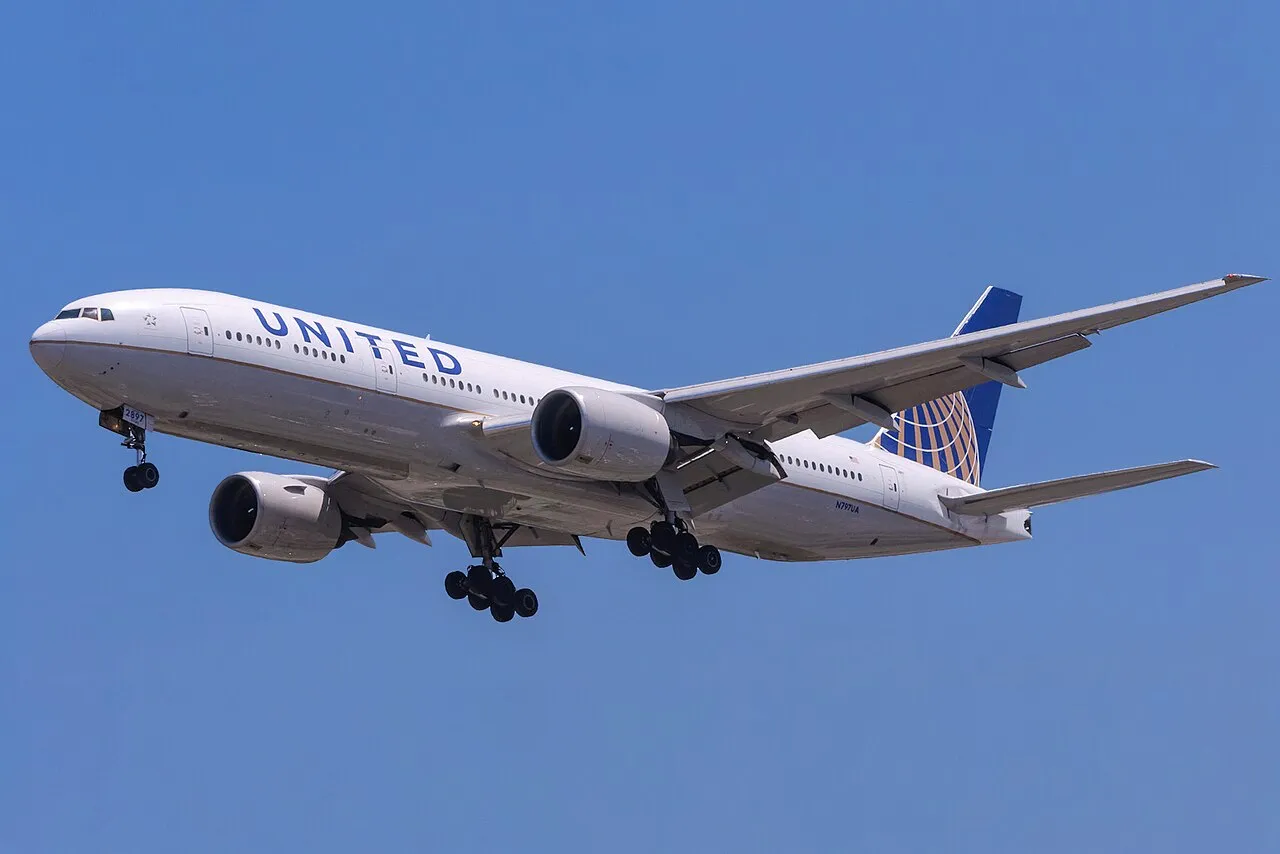
As of May 2026, the Boeing 767 has been involved in 68 aviation occurrences, including 19 hull-loss accidents. Eleven fatal crashes, including seven hijackings, have killed a combined 854 occupants. The type’s first fatal accident, Lauda Air Flight 004, crashed near Bangkok on 26 May 1991 after an in-flight thrust reverser deployment, killing all 223 aboard. Two 767s under hijacker control were flown into the World Trade Center on 11 September 2001: American Airlines Flight 11 killed all 92 aboard and United Airlines Flight 175 killed all 65 aboard, and more than 2,600 further people died in the towers and on the ground. The type’s first serious incident, Air Canada Flight 143, the “Gimli Glider,” ran out of fuel at about 41,000 feet on 23 July 1983 and glided to a safe emergency landing in Gimli, Manitoba, with no fatalities1.
Similar aircraft
- Airbus A330: Europe’s rival mid-size wide-body twinjet, built for the same long-haul, point-to-point role the 767 helped pioneer.
- Boeing 787 Dreamliner: the composite-structure successor Boeing developed to replace the 767, promising about 20 percent better fuel efficiency1.
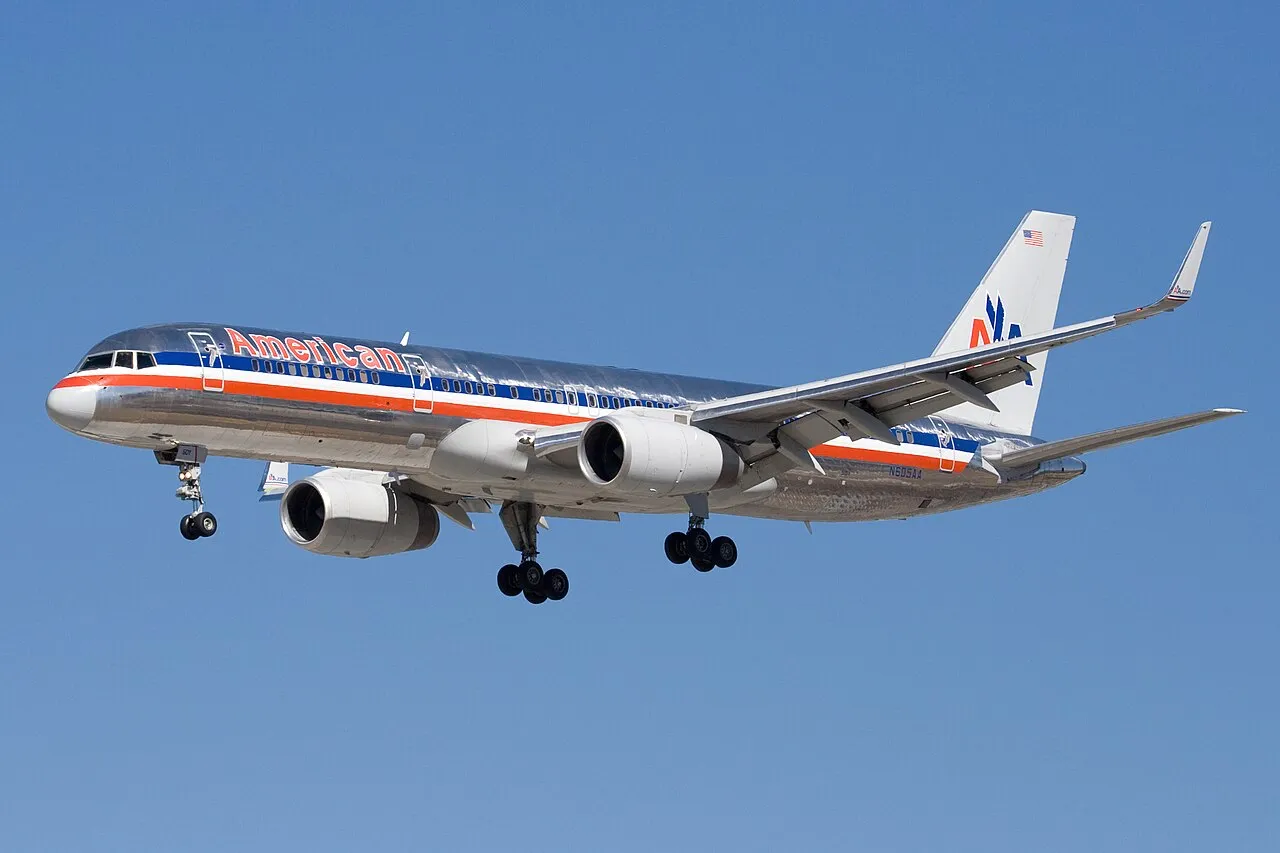
- Boeing 757: a narrow-body developed alongside the 767 as a near-twin, sharing cockpit design, avionics and handling so pilots could fly both types1.
_ZbySau.webp)
_ZnEDr2.webp)
_Z1wAcy8.webp)