Contents
The Tupolev Tu-22M, NATO reporting name Backfire, is a Soviet bomber designed by Tupolev and built by the Kazan Aircraft Production Association1. It is a long-range aircraft for nuclear strike, conventional attack, anti-ship and reconnaissance missions2, and it first flew on 30 August 1969. In 2024 the Russian Air Force had 57 of them in service3, according to the IISS Military Balance.
Design and development
The earlier Tu-22 had a landing speed 100 km/h above previous bombers and a tendency to pitch up and strike its tail on landing. Tupolev first considered modifying the Tu-22 with more powerful engines and a changed wing sweep; it later developed a new design as an alternative to the T-4. After work on Sukhoi’s T-4 was halted, the bureau was officially charged in 1967 with building that variable-geometry bomber, meant to reach 2,300 km/h and fly 7,000 km without refuelling2. Compared with the T-4 it was an evolutionary design, whose appeal lay in simplicity and low cost3.
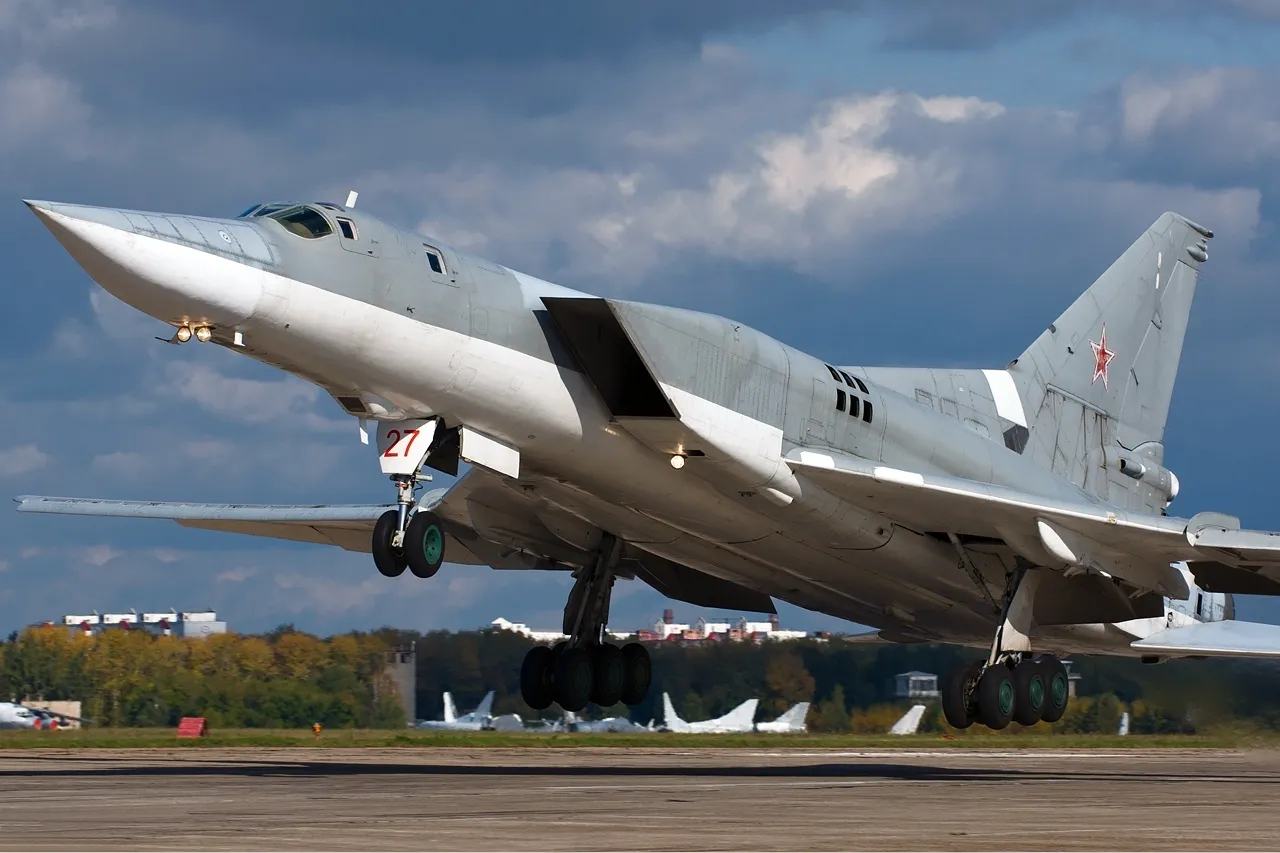
The name Tu-22M suggested a modified Tu-22. The Air Force and Tupolev agreed to pass off the design as an update of the Tu-22 in talks with the government, and the Soviets used the designation in SALT-2 arms control negotiations. Its two turbofans sit in the fuselage, fed by large rectangular air intakes2. The crew is four: pilot, co-pilot, navigator and weapon systems officer3.
Specifications
The Tu-22M3 is 42.46 m long; span 34.28 m at 20°, 23.3 m at 65°. It weighs up to 126,000 kg at take-off. Its Kuznetsov engines and top speed are two NK-25 turbofans of 247.9 kN; 1,997 km/h at 9,140 m. Range is 7,000 km ferry, or 2,500 km with a typical 10,000 kg load3.
Range was the point of a long Cold War argument. Tupolev claimed a radius of action of only 2,200 km for the early Backfires, while the US Defense Intelligence Agency first estimated about 5,000 km2, enough to threaten the United States.
Variants
- Tu-22M0: the first version, produced only in small quantities due to inadequate performance2.
- Tu-22M1 (Backfire-A): the first prototype was finished in July 19712, and after four years of tests it joined Soviet Naval Aviation.
- Tu-22M2 (Backfire-B): the first large-scale version, with NK-22 engines; 211 were produced at Kazan between 1973 and 19832.
- Tu-22M3 (Backfire-C): a lengthened nose, new intakes and wing sweep up to 65 degrees. It first flew on 20 June 1977, joined the active inventory in 19832, and 268 were built until 19933.
- Tu-22MR: a long-range reconnaissance version that entered service in 19852.
- Tu-22M3M: an upgrade with NK-32-02 engines, SVP-24-22 bombsights and a phased array NV-45 radar. It was rolled out at Kazan on 16 August and made its debut flight in December 20184; service life is to be extended to 40–45 years3.
Production of every variant totalled 4973.
Operators and service
The Soviet Union first used the Tu-22M in combat in Afghanistan, flying strikes from December 1987 to January 1988 to help relieve the Siege of Khost, and again in October 1988. Under the Nunn–Lugar programme, the 60 Tu-22Ms inherited by Ukraine were dismantled by 2006. India reportedly signed a lease-to-buy contract in 19993 for four aircraft.
Russia has flown it on bombing missions in the First Chechen War, the Russo-Georgian War, Syria and the war against Ukraine3. In August 2023 Ukraine’s military intelligence chief Kyrylo Budanov said Russia had 27 operable Tu-22M3s left. Russian forces regularly use the type against Ukraine, commonly armed with AS-4 heavy anti-ship missiles5.
Safety record
On 8 July 2004 a Tu-22M3 suffered a total electrical failure at night and crashed short of the runway at Soltsy. On 9 August 2008 a Georgian Buk-M1 missile shot down a Tu-22MR. A Tu-22M3 crash-landed at Olenya on 22 January 20193 after a training flight.
A drone strike on 19 August 20235 destroyed a Tu-22M3 at Soltsy. On 19 April 20246 a Tu-22M3 crashed in Stavropol Krai: Ukraine’s air force said it shot the bomber down, while Russia’s defence ministry blamed a technical malfunction. In Operation Spiderweb on 1 June 20253, at least four Tu-22M3s were destroyed at Belaya air base.
Similar aircraft
- Tupolev Tu-16: an earlier Tupolev jet bomber built in far larger numbers: 1,509 by 19637.
- Tupolev Tu-160: also variable-geometry, but powered by four NK-32 engines8 to the Tu-22M3’s two.
- Rockwell B-1 Lancer: an American swing-wing bomber whose sweep is restricted to 60 degrees9.