Contents
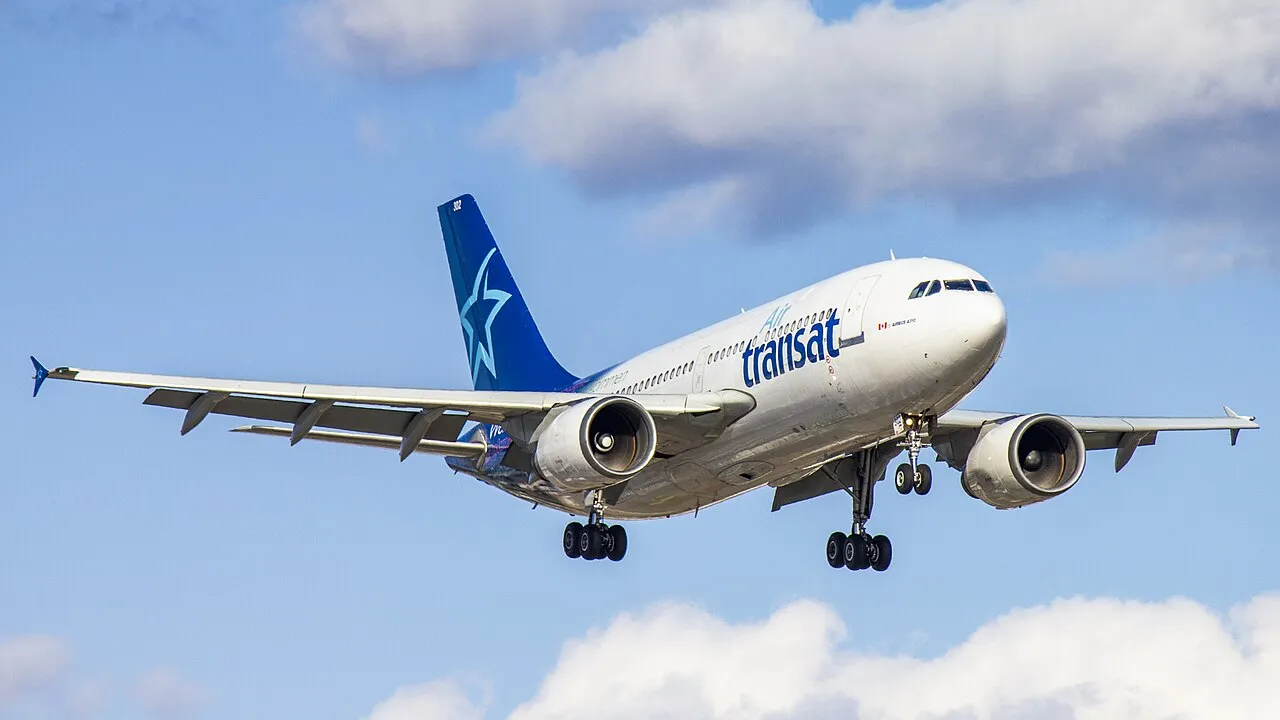
The Airbus A310 is a twin-engine, wide-body airliner built by Airbus Industrie, developed as a shorter, lower-capacity companion to the Airbus A300. It was designed for medium- to long-haul routes that did not need the A300’s full cabin length, and airlines flew it both as a passenger jet and, later in its life, as a freighter. The type first flew on 3 April 1982, and it remains in limited service, mainly with cargo operators and airlines in the Middle East1.
Design and development
Airbus launched the programme on 7 July 1978 with orders from Swissair and Lufthansa, the two airlines that had asked for a smaller companion to the A300. Airbus built the A310 by shortening the fuselage of the A300 and redesigning the wing, giving the new type a lighter structure than its predecessor while reusing much of the A300’s systems and production tooling. The new wing was cut down from 260 to 219 square metres, and the fuselage measured 6.95 m shorter than the original A300, while keeping the same eight-abreast cabin cross-section. The cockpit was another break from the A300: the A310 introduced a two-crew glass cockpit as standard, dropping the flight engineer’s position that the A300 still carried, a layout Airbus later carried over to the A300-600 under a common type rating. The approach let Airbus offer a smaller-capacity widebody without developing an entirely new aircraft, and the type became the second member of the Airbus widebody family after the A300. Airbus Industrie, the multinational consortium that became today’s Airbus, manufactured the A310, which received its type certificate within a year of its first flight and entered revenue service with launch customer Swissair in April 19831.
Specifications
The A310 is 46.66 m long with a wingspan of 43.9 m. The heaviest production version, the A310-300, has a maximum take-off weight of 164,000 kg and a range of about 9,540 km. A typical two-class cabin seats 220 passengers, with layouts of up to 243 in an all-economy configuration. It cruises at about 890 km/h, around Mach 0.84, powered by two General Electric CF6-80C2 or two Pratt & Whitney PW4000-series turbofans1.
Variants
Airbus built the A310 in two main passenger lengths: the initial A310-200 and the longer-range A310-300, each offered with a choice of General Electric or Pratt & Whitney engines. Both came in convertible passenger-freighter versions, the A310-200C and A310-300C, alongside pure A310-200F and A310-300F freighter conversions. A number of airframes later went on to military and specialist roles: the A310 MRTT multi-role tanker transport, flown by the German Air Force, the CC-150 Polaris, a VIP and transport variant operated by the Royal Canadian Air Force, and the A310 Zero G, a modified aircraft flown by Novespace for weightlessness research. In total, 255 A310s were built between 1981 and 19981.
Operators and service
The A310 found customers among major international and regional carriers through the 1980s and 1990s, launched by Swissair and Lufthansa, before Airbus ended production in 1998 with final delivery going to Uzbekistan Airways in June 1998. Today it is in limited service, mainly with cargo and Middle Eastern operators, among them Mahan Air, Iran Air, Ariana Afghan Airlines, ULS Airlines Cargo and Turkish Cargo, a role shift typical of older widebody types as airlines retire them from scheduled passenger service in favour of newer aircraft and operators of cargo and government fleets keep flying them for longer. On the military side, the type still flies as a tanker with the German Air Force and as a VIP transport with the Royal Canadian Air Force, with the Spanish Air and Space Force also among the type’s military operators1.
Safety record
By September 2015 the A310 had been involved in 12 hull-loss accidents with a combined 825 fatalities, and nine hijackings with a combined five fatalities. The deadliest of these was Kenya Airways Flight 431, which crashed off Abidjan in 2000 and killed 169 people; other major accidents include Thai Airways Flight 311 in 1992, with 113 fatalities, and Yemenia Flight 626 in 2009, with 152 fatalities and a single survivor1.
Similar aircraft
- Airbus A300: the larger, longer-fuselage widebody1 that the A310 was derived from, sharing much of its structure and systems.
- Boeing 767: a twin-engine widebody of similar size and era, Boeing’s competing answer in the medium-capacity widebody market.
_ZVY5TD.webp)
_Z1SYJMK.webp)
_approaching_JFK_Airport_1b71Hs.webp)
_(cropped)_Z2qDRzS.webp)