_Z1SYJMK.webp)
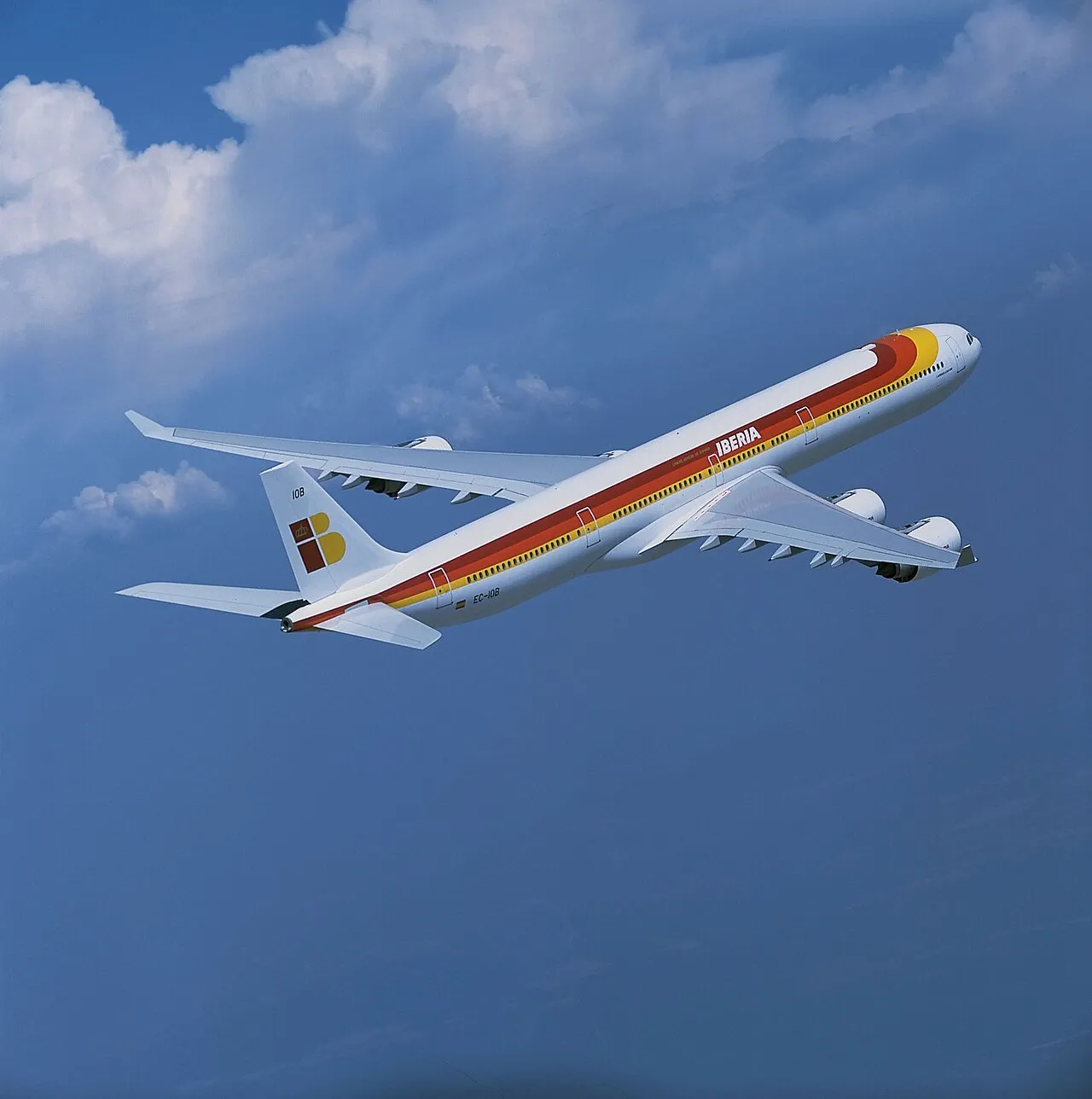
The Airbus A330 is a twin-engine widebody airliner built by Airbus for medium- to long-haul routes. Airbus markets the current A330-300 as a flexible aircraft for both short, dense routes and long-haul flying2. The type has flown for airlines around the world since the 1990s and remains in production and in widespread service1 today.
Design and development
The original A330 made its first flight on 2 November 1992, developed alongside the four-engine A340 as a shared-wing pair aimed at different route lengths. Airbus later re-engined the family as the A330neo, replacing the original turbofans with Rolls-Royce Trent 7000 engines1 to cut fuel burn and extend range without a new airframe programme.
The earlier generation, now called the A330ceo, could be fitted with General Electric CF6-80E1, Pratt & Whitney PW4000 or Rolls-Royce Trent 700 turbofans, giving airlines a choice Airbus dropped for the neo, which uses the Trent 7000 exclusively1.
Specifications
The current production model, the A330-300, is 63.66 metres long with a wingspan of 60.3 metres, a span it shares with the shorter A330-200. Its maximum take-off weight is 242,000 kg, while the A330-200 can be configured up to about 251,000 kg. The A330-300 has a range of about 11,750 km2; the longer-range A330-200 reaches roughly 13,450 km, and the newer A330-900 about 13,610 km.
Typical three-class seating on the A330-300 is around 277 passengers, against about 253 on the smaller A330-200 and about 287 on the A330-900. By August 2026, Airbus had delivered 1,672 A330s1 across both generations.
Variants
The family splits into two generations. The original A330ceo comprises the A330-200 and the longer A330-300, which differ chiefly in length, weight, range and seating as set out above; A330ceo production ended in 2020. The re-engined A330neo family, the A330-800 and A330-9001, carries the Trent 7000 engine and remains in production, with the A330-900 as the larger and more widely ordered of the two.
Operators and service
The A330 flies with airlines worldwide on both short-haul and long-haul routes, a flexibility Airbus built into the A330-300’s design. The ceo generation ended production in 2020 but continues in airline service1 alongside the newer neo, which remains in production for new orders.
Similar aircraft
- Boeing 787 Dreamliner: a newer composite-airframe twin-engine widebody aimed at a similar medium- to long-haul market, built by Boeing.
- Airbus A350: Airbus’s newer, larger composite-airframe widebody, positioned above the A330 in the current lineup.
_ZVY5TD.webp)
_approaching_JFK_Airport_1b71Hs.webp)
_(cropped)_Z2qDRzS.webp)