Contents
The Mikoyan-Gurevich MiG-21 is a lightweight, single-engine delta-wing fighter designed as a day interceptor and later adapted for air superiority and ground attack. The Mikoyan-Gurevich Design Bureau developed it in the Soviet Union, and it went on to become the most-produced supersonic jet aircraft in aviation history. Known to NATO by the reporting name “Fishbed,” it remains in service1 with a handful of air forces decades after Soviet production ended.
Design and development
The type grew out of Soviet jet fighter work that followed the MiG-15 and MiG-17, as designers looked for a lighter, faster interceptor. Early prototyping began with the Ye-1, which was redesigned as the Ye-2 after its intended engine proved underpowered. The decisive step came with the Ye-4 prototype, which introduced the sharply swept delta wing that defined every production MiG-21 and first flew on 16 June 1955; an earlier swept-wing prototype, the Ye-2, had already flown on 14 February 19551.
The 57-degree delta wing gave the aircraft a fast climb and good performance as an interceptor, but turning combat cost it speed quickly, a trade-off that shaped how pilots had to fight in it. Fuel tankage placed ahead of the centre of gravity also limited the clean aircraft to around 45 minutes of endurance. The nose intake housed the radar behind the shock cone, a layout that left little room to grow the radar and limited its development potential through the type’s long production run1.
Specifications
The definitive late-production MiG-21bis is 14.7 metres long and has a wingspan of 7.154 metres. Its maximum take-off weight is 10,400 kg on a paved runway with larger wheels and tyres, dropping to 8,800 kg on an unprepared or metal-planking strip. It is powered by one Tumansky R-25-300 afterburning turbojet, giving it a cruise speed of about 1,000 km/h2. Combat range clean at 11,000 m is 660 km, rising to 793 km with two R-3S missiles and a drop tank. A single pilot flies the combat variants; the MiG-21UM trainer seats two1.
Variants
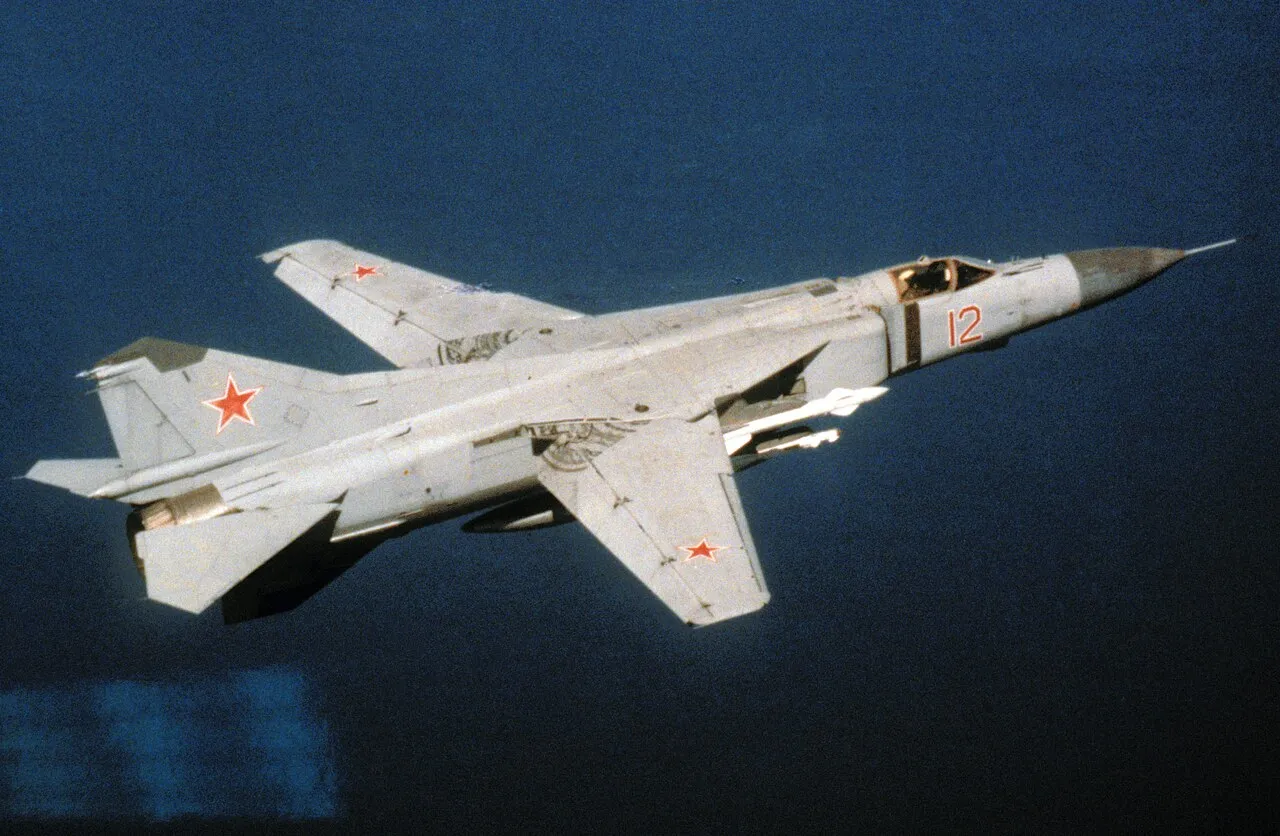
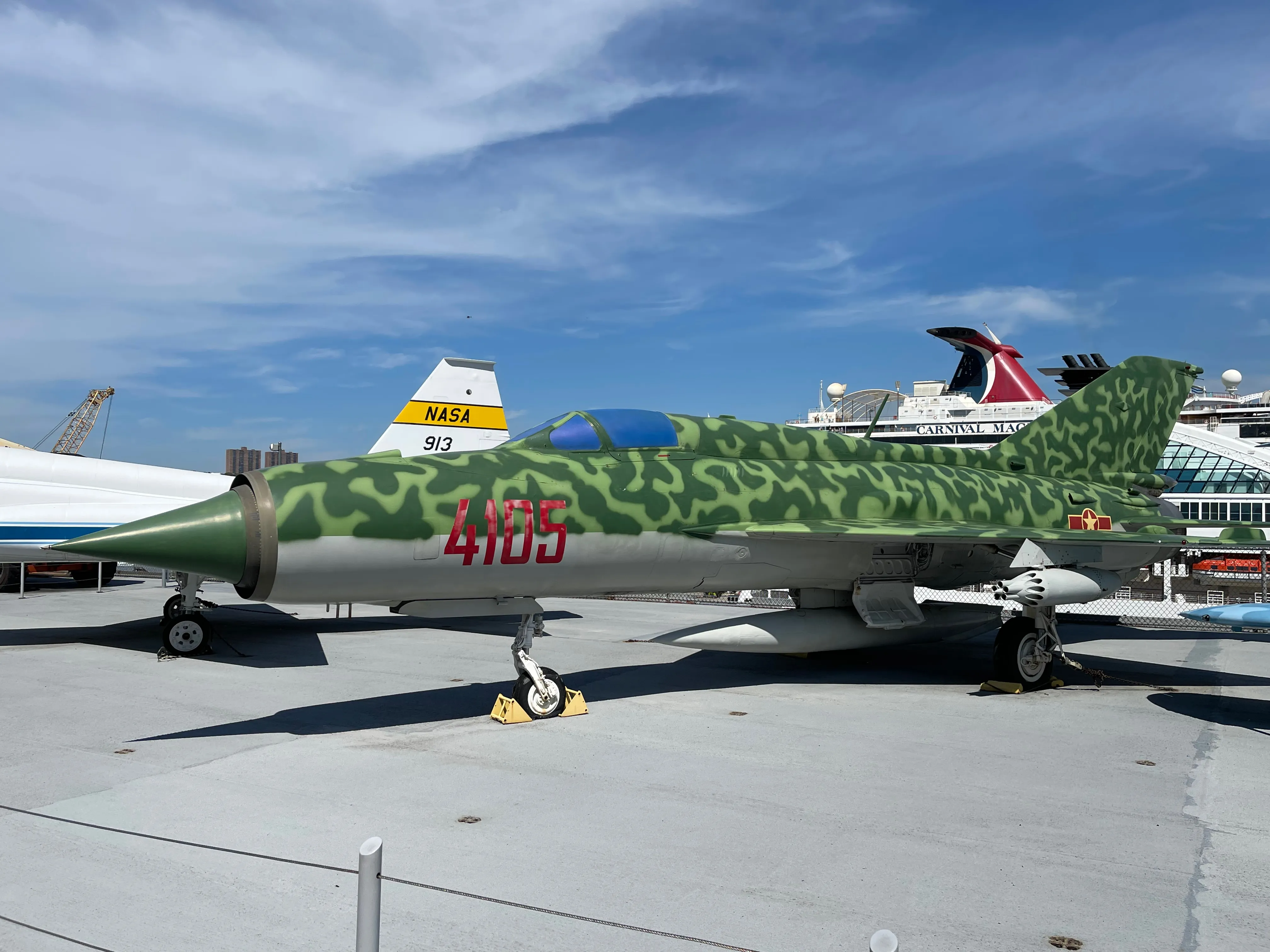
The first production model, the MiG-21F/F-13, carried basic avionics and a fixed cannon armament. Mikoyan then built dedicated interceptor versions, the MiG-21PF and MiG-21PFM, with the RP-21 Sapfir radar and improved weapons — the variant pictured above. The MiG-21S and MiG-21SM added greater internal fuel capacity, and the MiG-21bis, fitted with the more powerful R-25 engine, became the most capable production version. The MiG-21UM is the definitive two-seat trainer1.
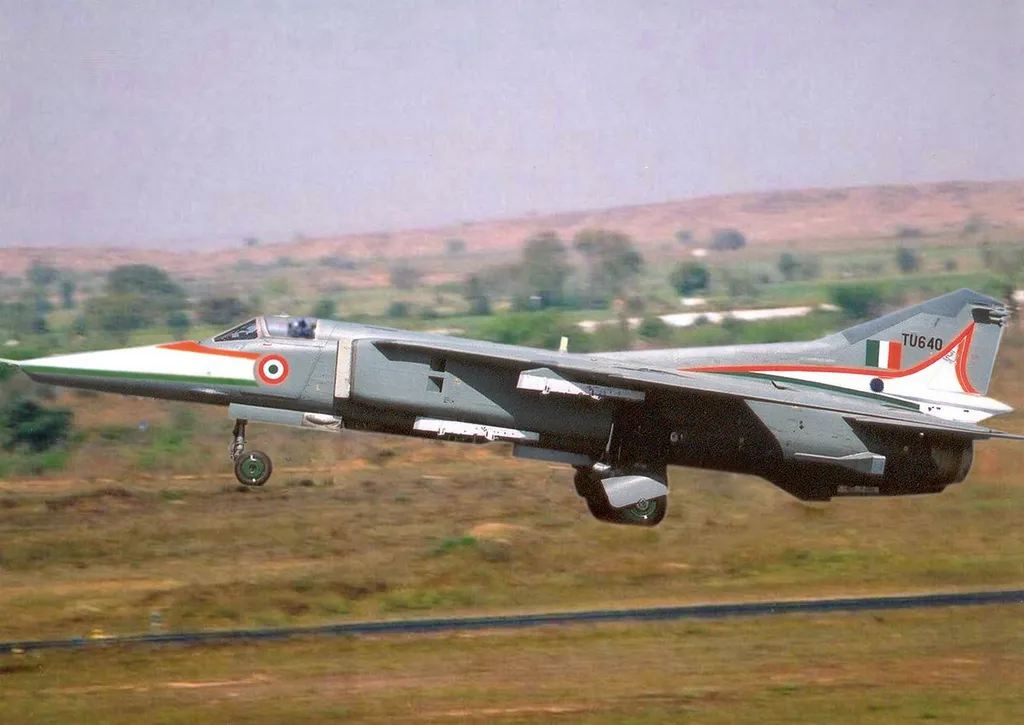
Production spread beyond the Soviet Union: Hindustan Aeronautics Limited built 840 under licence in India, and Aero Vodochody built 194 in Czechoslovakia, alongside 10,645 built in the USSR between 1959 and 1986, for a total of 11,496 aircraft1.
Operators and service
The MiG-21 saw heavy combat use across several conflicts. In the Vietnam War it was North Vietnam’s primary interceptor, flown under ground-controlled intercept tactics against American strike aircraft. Egypt and Syria flew it extensively through the Arab-Israeli wars between 1967 and 1982, and the Indian Air Force deployed it in the 1965 and 1971 wars with Pakistan. Iraqi MiG-21s also engaged Iranian F-14s and F-4s during the Iran-Iraq War. Its low cost made it a popular export: the type earned the nicknames “balalaika,” after its delta-wing silhouette, “ołówek” (Polish for pencil), and “Én Bạc” (Vietnamese for silver swallow). The Indian Air Force retired its last MiG-21 squadrons in August 2025 after operating roughly 400 at peak strength, but other air forces still fly the type1, some through Russian, Israeli or Romanian avionics upgrade programmes.
Safety record
The type’s safety reputation was especially poor in Indian service: more than 170 Indian Air Force pilots and 40 civilians died in MiG-21 accidents since 1970, earning it the nickname “flying coffin” in the Indian press. Engine surge problems during afterburner use and maintenance shortfalls contributed to the toll, and more than half of the 840 aircraft India built between 1966 and 1984 were eventually lost to crashes1.
Similar aircraft
- Lockheed F-104 Starfighter: an American contemporary built around the same era, named as a comparable type1.
- Northrop F-5 Freedom Fighter: a similarly low-cost, lightweight supersonic fighter exported widely to the same kind of air forces1.
- Dassault Mirage III: the French delta-wing fighter of the same generation, also cited as a direct comparison1.
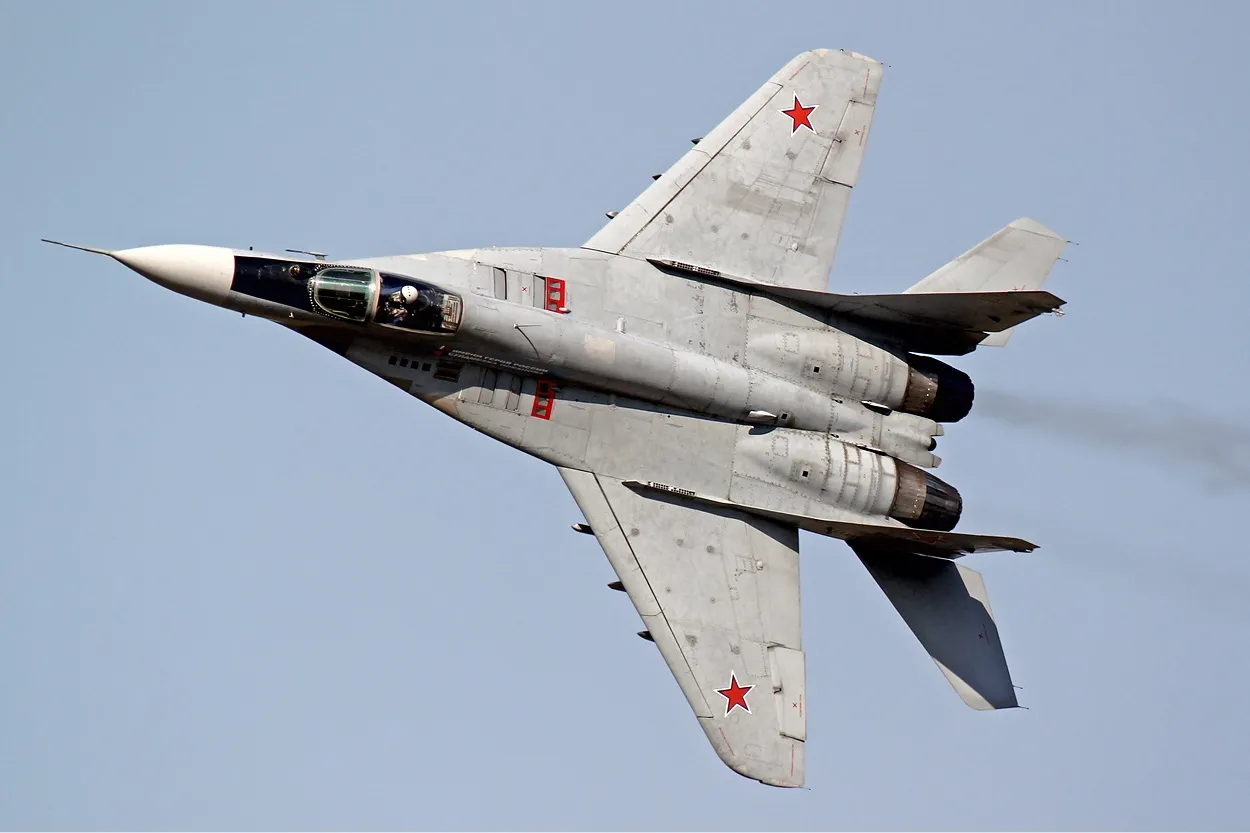
- Mikoyan MiG-29: the later, larger Mikoyan fighter that eventually succeeded the MiG-21 in Soviet and Russian service.
_fA8XS.webp)
_2dTk34.webp)
_ZfgbMz.webp)